Autism Sleep Problems: Strategies for Better Sleep
Autism sleep problems strategies that work: gentle bedtime routines, ruling out medical causes, and when to ask your doctor about melatonin.
The short answer: If your autistic child struggles to fall asleep or stay asleep, you are not doing anything wrong, sleep difficulties are extremely common in autism, with estimates that up to 80 percent of children with autism spectrum disorder have some form of sleep disturbance (Current Sleep Medicine Reports, 2022). The most effective place to start is not a supplement, but gentle, consistent behavioral changes: a short and predictable bedtime routine, a dark and cool sleep space, a steady schedule, and supports that help your child learn to fall asleep on their own. These behavioral approaches are the recommended first-line strategy by the American Academy of Neurology (AAN Practice Guideline, 2020). Below, we walk through autism sleep problems strategies you can begin at home tonight.
You are not alone, and this is not a parenting failure
Sleep struggles are one of the most common challenges families of autistic children face. Clinical estimates range widely, with the American Academy of Neurology citing that 44 to 83 percent of children and adolescents with autism report coexisting sleep abnormalities (AAN Practice Guideline, 2020). What makes autism different is persistence: in typically developing children, sleep problems “often lessen with age. In children and adolescents with ASD, sleep problems often persist” (AAN Practice Guideline, 2020). That is why it helps to have a plan rather than waiting for things to improve on their own.
These struggles also deserve to be taken seriously, not minimized. As the Autism Speaks ATN/AIR-P sleep toolkit puts it, “Many children with autism have difficulty with sleep. This can be stressful for children and their families” (Autism Speaks, ATN/AIR-P toolkit). Poor sleep can also ripple into daytime, one peer-reviewed study found autistic children with sleep disturbances were 1.72 times more likely to visit the emergency room and 2.71 times more likely to be hospitalized than those without, and sleep problems are linked to more daytime behavioral challenges (Journal of Neurodevelopmental Disorders, 2024). Addressing sleep is worth the effort.
Rule out medical and co-occurring causes first
Before changing routines, it is worth checking whether something physical or medical is keeping your child awake. The AAN guideline advises clinicians to “assess for medications and coexisting conditions that could contribute to the sleep disturbance,” including GERD (acid reflux), epilepsy, sleep apnea, anxiety, ADHD, and depression (AAN Practice Guideline, 2020). If your child snores heavily, wakes gasping, has frequent reflux, or seems to be in pain at night, mention it to your pediatrician. Treating an underlying cause can sometimes resolve the sleep problem entirely, and it ensures the behavioral strategies below have the best chance to work.
Build a short, predictable bedtime routine
A calm, consistent bedtime routine is the cornerstone of effective autism sleep problems strategies. The Autism Speaks ATN/AIR-P toolkit recommends keeping the routine “predictable, relatively short (20–30 minutes)” with calming activities like reading or quiet music, and starting it “15 to 30 minutes before the set bedtime” (Autism Speaks). The same few steps, in the same order, every night, help your child’s body and brain learn what comes next.
Just as important is what to avoid in the hour before bed. The toolkit advises steering clear of exciting TV, movies, and electronic games, computers, bright lights, loud music, and rough-housing such as running or jumping (Autism Speaks). These wind your child up at exactly the wrong time. Daytime exercise helps sleep, but not close to bedtime, and caffeine is worth watching, it hides in tea, chocolate, and some sodas, not just coffee (Autism Speaks).
For children who do best with visual structure, the toolkit recommends supports like visual schedules that show each bedtime step and “bedtime passes,” a tool that gives a child a set number of acceptable reasons to leave the room (Autism Speaks). Many of the families we work with across St. George and Washington County find these visual tools far less stressful than verbal back-and-forth at bedtime.
Set up a sleep-friendly environment
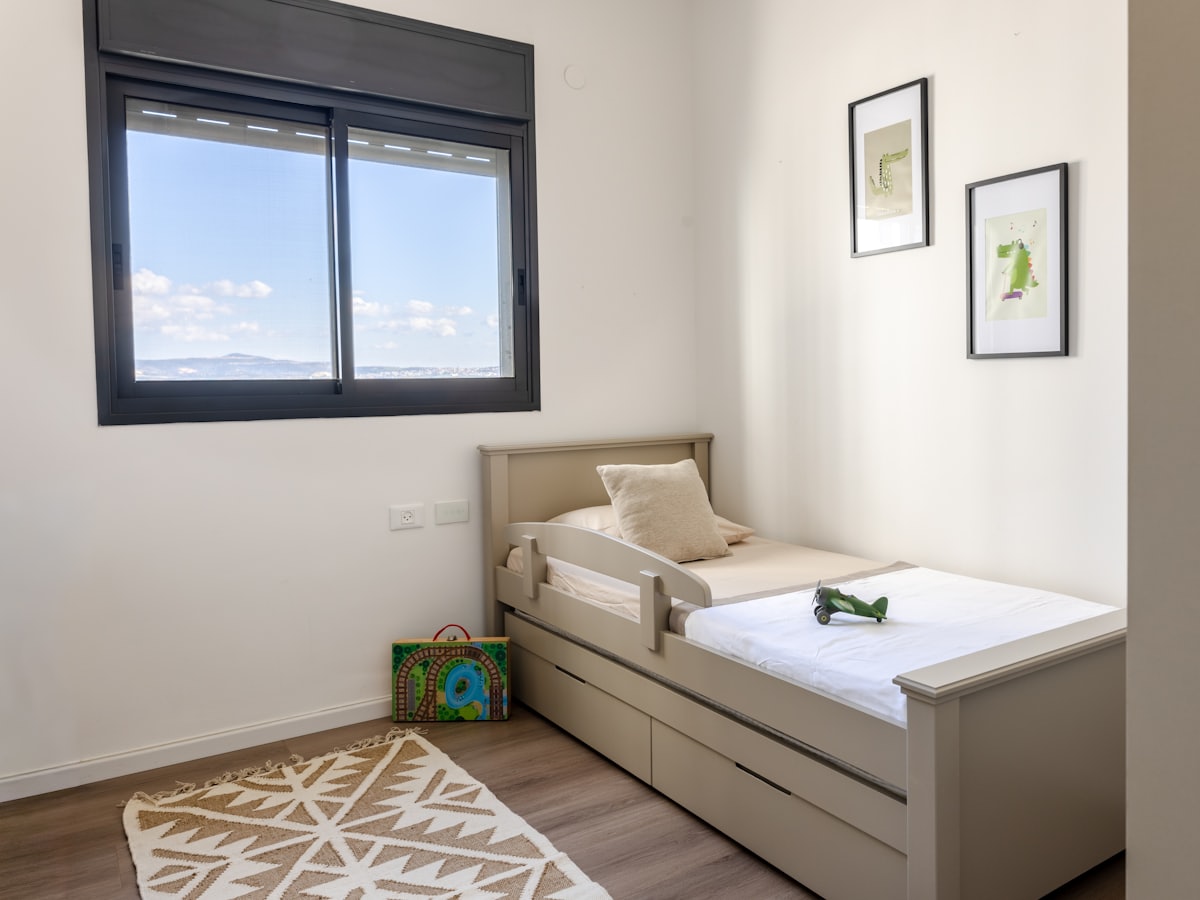
The room your child sleeps in should support sleep, not fight it. The Autism Speaks toolkit recommends a sleep environment that is “dark, quiet and cool,” adapted for your child’s specific sensory sensitivities (Autism Speaks). For some children that means blackout curtains and a white-noise machine; for others it means softer pajamas or removing a tag that itches. You know your child’s sensory profile best, so adjust accordingly.
One honest note: weighted blankets are popular, and they are not harmful, the AAN review found no serious adverse events with them. But the same review found no evidence that weighted blankets or specialized mattresses actually improve sleep (AAN Practice Guideline, 2020). If your child finds a weighted blanket calming, there is no reason to stop using it. Just don’t expect it to be the solution by itself.
Keep a steady schedule, even on weekends
A regular sleep and wake schedule is one of the simplest, highest-impact autism sleep problems strategies. The Autism Speaks toolkit advises keeping the sleep/wake schedule regular with little difference between weekdays and weekends (Autism Speaks). Sleeping in on Saturday feels like a treat, but it shifts your child’s internal clock and can undo a week of progress. Consistent wake-up times anchor the whole day.
Help your child learn to fall asleep independently
Many children with autism rely on a parent’s presence to fall asleep, which means every night-waking turns into a wake-the-parent event. Teaching independent sleep is a core behavioral goal. The toolkit recommends helping the child learn to fall asleep without a parent present (Autism Speaks). The AAN guideline names specific behavioral approaches that are recommended as first-line treatment, alone or alongside medication: positive bedtime routines, bedtime fading, putting the child to bed near their actual sleep-onset time and then gradually moving it earlier, and graduated extinction, which fades parent presence in small, planned steps (AAN Practice Guideline, 2020). In studies, family-based behavioral programs used as few as “4 weekly 50-minute sessions” (AAN Practice Guideline, 2020). A BCBA can help you choose the gentlest approach that fits your child and family.
What about melatonin?
Melatonin is a doctor-led decision, not a do-it-yourself fix. When behavioral strategies alone are not enough, the AAN guideline says clinicians may offer melatonin, ideally using a pharmaceutical-grade product, starting at a low dose and giving it 30 to 60 minutes before bed, while counseling families about the “lack of long-term safety data” (AAN Practice Guideline, 2020). In the guideline’s meta-analysis, melatonin reduced the time it took to fall asleep by about 33 minutes and increased total sleep time by about 53 minutes (AAN Practice Guideline, 2020). Those are meaningful numbers, but the takeaway is to talk with your child’s doctor before starting melatonin, not to start it on your own.
Frequently Asked Questions
Why do so many children with autism have trouble sleeping? Sleep difficulties are simply very common in autism, by clinical estimates, up to 80 percent of children with autism have some form of sleep disturbance (Current Sleep Medicine Reports, 2022). Unlike in typically developing children, where sleep problems “often lessen with age,” in autistic children they “often persist,” which is why a proactive plan helps (AAN Practice Guideline, 2020).
What bedtime routine works best for an autistic child? A predictable, relatively short routine of 20 to 30 minutes with calming activities like reading or quiet music, started 15 to 30 minutes before bedtime, in a dark, quiet, and cool room (Autism Speaks). Visual schedules and bedtime passes can make it smoother.
Is melatonin safe for children with autism, and should I try it? Melatonin should be a clinician-led decision. The AAN guideline says clinicians may offer it when behavioral strategies are not enough, starting low and 30 to 60 minutes before bed, while noting the lack of long-term safety data (AAN Practice Guideline, 2020). Talk with your child’s doctor before starting it.
How can I help my child learn to fall asleep on their own without me in the room? Behavioral approaches like positive bedtime routines, bedtime fading, and graduated extinction, gradually reducing parent presence, are recommended first-line strategies (AAN Practice Guideline, 2020). The Autism Speaks toolkit also recommends helping the child fall asleep without a parent present, using supports like visual schedules (Autism Speaks). A BCBA can tailor the gentlest plan for your family.
When should I talk to my child’s doctor about their sleep problems? Anytime sleep is affecting your child or family, and especially before trying melatonin. Doctors are advised to first rule out medical and co-occurring causes such as GERD, epilepsy, sleep apnea, anxiety, ADHD, and depression (AAN Practice Guideline, 2020), so a conversation early on is worthwhile.
We can help, and there’s no waitlist
If bedtime feels like a nightly battle, you do not have to figure it out alone. At Ryse ABA Therapy, our BCBA-led team brings these behavioral sleep strategies right into your home, building a plan around your child’s real routines and sensory needs, because we see firsthand what works in the actual rooms where your family lives. We serve families across Southern Utah, including St. George, Washington, Hurricane, Santa Clara, Ivins, La Verkin, and Cedar City, and there is no waitlist, you can start right away. Call us at (385) 549-5656 to talk through your child’s sleep. When we Ryse together, we achieve more.
Sources
- Sleep in Children with Autism Spectrum Disorder: A Narrative Review and Systematic Update, Current Sleep Medicine Reports, 2022. https://pmc.ncbi.nlm.nih.gov/articles/PMC9630805/
- Practice guideline: Treatment for insomnia and disrupted sleep behavior in children and adolescents with autism spectrum disorder, American Academy of Neurology (Williams Buckley et al.), Neurology, 2020. https://pmc.ncbi.nlm.nih.gov/articles/PMC7238942/
- ATN/AIR-P Strategies to Improve Sleep in Children with Autism, Autism Speaks. https://www.autismspeaks.org/tool-kit/strategies-improve-sleep-children-autism
- Sleep disturbances are associated with greater healthcare utilization in children with autism spectrum disorder, Journal of Neurodevelopmental Disorders, 2024. https://pmc.ncbi.nlm.nih.gov/articles/PMC11157737/