Siblings of an Autistic Child: Helping Them Understand and Support Their Brother or Sister
A warm guide for siblings of an autistic child: how to explain autism, protect each kid's identity, and build close, lasting bonds at home.
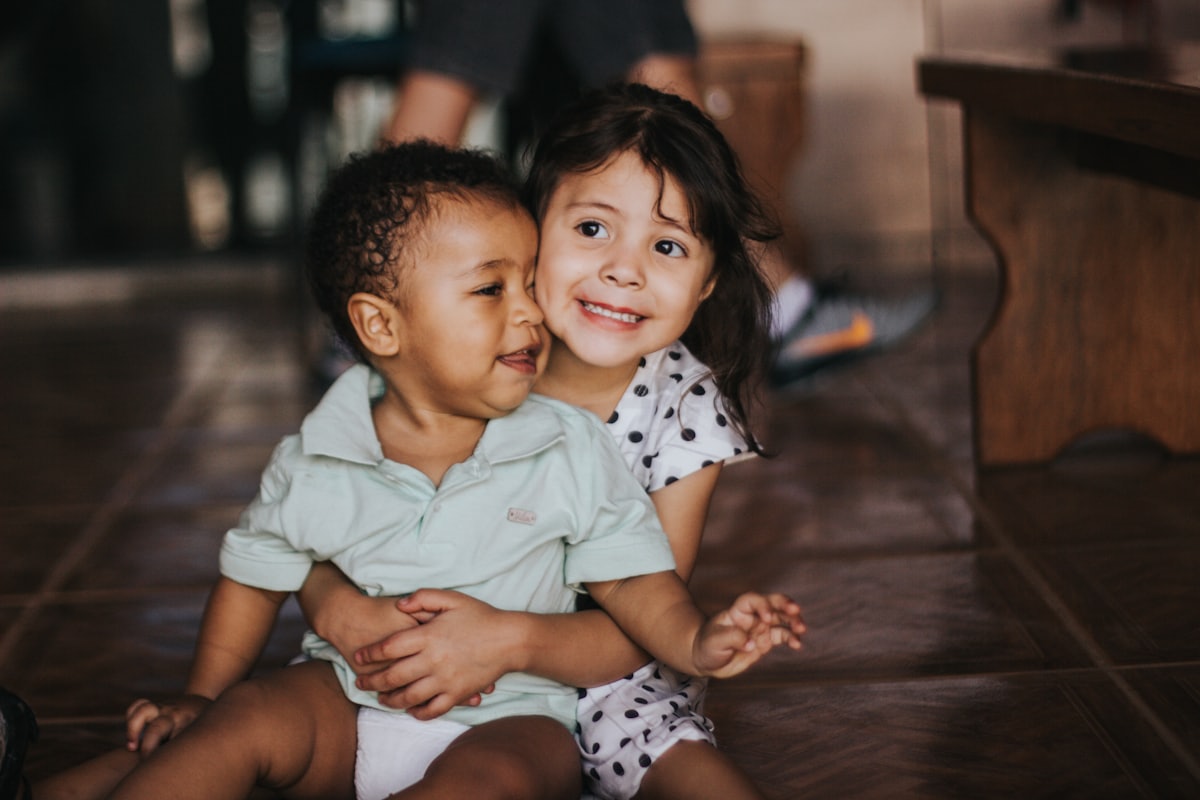
TL;DR: If you have both an autistic child and neurotypical children, here’s the most reassuring thing to know first: sibling relationships involving autism are often genuinely close and loving. A 2024 study found that all ten siblings interviewed reported getting along with or loving their autistic brother or sister, with relationships “typically described as close and loving” and siblings often acting protectively toward their autistic sibling (Trew, 2024). You can nurture that bond by talking openly and age-appropriately about autism, validating your other children’s feelings, protecting each child’s individual identity, and connecting them to sibling-support resources when helpful. Below is a practical, affirming roadmap for families across Southern Utah.
Raising children with different needs under one roof can feel like a constant balancing act. Many parents worry quietly that their neurotypical kids are missing out, or that the sibling relationship will be defined by difficulty. The research and expert guidance below tell a more hopeful story, and give you concrete ways to help every child in your home thrive.
Start from closeness, not deficit, when thinking about siblings of an autistic child
The most important reframe for parents of siblings of an autistic child is that warmth and connection are common, not rare. In a 2024 qualitative study published in the Journal of Autism and Developmental Disorders, every one of the ten siblings interviewed reported getting along with or loving their autistic brother or sister. The author described these relationships as “typically described as close and loving,” and noted that siblings were often protective of their autistic sibling (Trew, 2024).
That matters because so much of the cultural conversation around siblings leans toward what’s hard or what’s lost. Yes, there are real challenges, but leading with the evidence of closeness helps you parent from a place of confidence rather than worry. Your children can absolutely build a meaningful, lasting bond. Your role is to give that bond room to grow.
It also helps to know how common autism is. The CDC’s most recent surveillance data identified autism spectrum disorder in about 1 in 31 (3.2%) of 8-year-old children for 2022, up from 1 in 36 in 2020 (CDC MMWR, 2025). In Utah specifically, the 2022 prevalence among 8-year-olds was 27.0 per 1,000 (CDC MMWR, 2025). A large and growing number of families here in Washington County and across Southern Utah include both autistic and non-autistic kids, you are far from alone.
Explain autism honestly, in language that fits each child’s age
The foundation of sibling understanding is an open, honest, age-appropriate conversation about autism. Emily Rubin, LICSW, Director of Sibling Support at the Eunice Kennedy Shriver Center at UMass Chan Medical School, advises parents to “talk openly and honestly with the sibling about the behavioral issues,” using language suited to the child’s age. She emphasizes that children shouldn’t have to keep secrets about frightening situations at home (Autism Speaks, Expert Q&A).
What this looks like in practice depends on your child’s age. For a young child, that might be: “Your brother’s brain works a little differently. Sometimes loud noises feel really big to him, so he covers his ears or needs a quiet space.” For an older child, you can go deeper, explaining sensory sensitivities, communication differences, and why certain routines matter so much.
Honesty does two things at once. It satisfies a sibling’s natural curiosity, and it reassures them that nothing scary is being hidden. When a meltdown happens or a routine gets disrupted, a child who understands why is far less likely to feel confused, frightened, or to blame themselves.
For a deeper, structured conversation, Autism Speaks offers a free parent toolkit, “A Sibling’s Guide to Autism,” and the Organization for Autism Research publishes “Brothers, Sisters, and Autism: A Parent’s Guide to Supporting Siblings,” both linked in the sources below.
Validate the full range of feelings, including the hard ones
It is completely normal for siblings of an autistic child to feel jealousy, embarrassment, worry, or resentment alongside their love. These feelings don’t mean anything has gone wrong; they mean your child is human. Naming and validating them is one of the most protective things you can do.
Neurotypical siblings often perceive that they receive less of their parents’ time and attention, simply because autism care can be demanding. Rather than dismissing those feelings (“Don’t be jealous, your sister needs more help”), it helps to acknowledge them directly: “It makes sense that you wish we had more time together. That’s real, and it matters to me.” A child whose difficult feelings are met with understanding rarely needs to act them out.
Rubin also stresses giving siblings “breathing room and personal space where they can go when things get chaotic” (Autism Speaks, Expert Q&A). A designated calm spot, a bedroom, a reading nook, headphones, gives a sibling somewhere to reset when the household gets intense, without anyone feeling pushed away.
Protect each child’s own identity and one-on-one time
Every child in your family deserves to be seen as more than “the sibling of an autistic kid.” Rubin recommends helping each child “have their own lives and identities outside of their identity as a sibling,” with opportunities to “shine” through hobbies, sports, and activities (Autism Speaks, Expert Q&A).
Carving out dedicated one-on-one time is the most practical expression of this. It doesn’t have to be elaborate, a weekly errand run together, a bedtime story that’s just theirs, a Saturday hike near St. George. What children remember is the consistency and the undivided attention, not the cost. Protecting a sibling’s individual interests, friendships, and accomplishments tells them clearly: you matter here, all on your own.
This isn’t about treating children identically, different kids genuinely need different things. It’s about fairness in the sense that each child’s needs are taken seriously, and each child gets to be fully themselves.
Connect siblings to support, knowing the evidence is positive but modest
Sibling-support programs can genuinely help, and it’s worth setting honest expectations about how much. A 2022 mixed-methods systematic review of 24 studies found that psychosocial interventions and support groups produced improvements in siblings’ self-esteem, social wellbeing, and knowledge about their sibling’s condition, reporting “positive, but small, differences in favour of the intervention groups” on knowledge, self-esteem, coping, and sibling relationships (Wolff et al., 2022). The authors stress that effects are modest and that supports work best when individualized.
A separate 2020 randomized controlled trial of a sibling support group similarly found that some areas of siblings’ mental health improved, though the effects were influenced by the autistic child’s symptom severity (Jones et al., 2020). In other words: these programs aren’t magic, but the research consistently points in a helpful direction.
Programs like Sibshops (peer support workshops for siblings of children with special needs) give kids a chance to meet others who “get it,” share experiences, and have fun. If a formal group isn’t available nearby, even an informal connection with another family in a similar situation can offer that same sense of not being alone.
Frequently Asked Questions
How do I explain autism to my young child in a way they’ll understand? Keep it honest, simple, and tied to what they actually see. Expert guidance is to “talk openly and honestly with the sibling about the behavioral issues,” using language suited to the child’s age (Autism Speaks, Expert Q&A). For a young child, that might mean explaining that their sibling’s brain works differently and that certain sounds, changes, or routines feel especially big to them.
Is it normal for siblings of an autistic child to feel jealous, embarrassed, or resentful? Yes, completely normal, and no cause for guilt. Neurotypical siblings often feel they receive less attention because autism care can be demanding. The healthiest response is to validate those feelings rather than dismiss them, and to give your child “breathing room and personal space where they can go when things get chaotic” (Autism Speaks, Expert Q&A).
How can I give my other children one-on-one attention when so much focus goes to my autistic child? Protect small, consistent pockets of dedicated time and help each child build an identity beyond being a sibling, through hobbies, sports, and activities where they can “shine” (Autism Speaks, Expert Q&A). A weekly outing or a bedtime ritual that belongs only to them often matters more than its size.
What sibling support groups or resources are available, and do they actually help? Programs like Sibshops and toolkits from Autism Speaks and the Organization for Autism Research exist for exactly this. Research suggests the benefits are real but modest: a systematic review found “positive, but small, differences in favour of the intervention groups” on knowledge, self-esteem, coping, and sibling relationships (Wolff et al., 2022).
How do I help my children build a positive, lasting relationship with their autistic brother or sister? Lead with the encouraging evidence: sibling relationships involving autism are frequently “close and loving,” with siblings often protective of their autistic brother or sister (Trew, 2024). Foster understanding, validate feelings, protect individual time, and create shared moments of fun, closeness is common and very achievable.
When you’re ready for support, we’re here, right away
Supporting every child in your family is a lot to hold, and you don’t have to do it alone, or wait to get started. Ryse ABA Therapy provides in-home and community-based Applied Behavior Analysis across Washington County (St. George, Washington, Hurricane, Santa Clara, Ivins, and La Verkin) and Cedar City, with a family-first, play-based, data-driven approach led by our clinical director, Noah Rasmussen, BCBA. Because we deliver care in your home and community, we get to see and support the whole family system, including siblings. Best of all, we have no waitlist, so families can start right away (an autism diagnosis and active insurance coverage are required). When we Ryse together, we achieve more. Call us at (385) 549-5656 to talk through next steps.
Sources
- CDC, Data and Statistics on Autism Spectrum Disorder. https://www.cdc.gov/autism/data-research/index.html
- CDC MMWR (2025), Prevalence and Early Identification of Autism Spectrum Disorder Among Children Aged 8 Years, 2022. https://www.cdc.gov/mmwr/volumes/74/ss/ss7402a1.htm
- Trew, S. (2024). Close Relationships Despite the Challenges: Sibling Relationships and Autism. Journal of Autism and Developmental Disorders, 55(9), 2989–3001. https://pmc.ncbi.nlm.nih.gov/articles/PMC12367821/
- Wolff, B., Magiati, I., Roberts, R., Skoss, R., & Glasson, E. J. (2022). Clinical Child and Family Psychology Review, 26(1), 143–189. https://pmc.ncbi.nlm.nih.gov/articles/PMC9879846/
- Jones, E. A., Fiani, T., Stewart, J. L., Neil, N., McHugh, S., & Fienup, D. M. (2020). Randomized controlled trial of a sibling support group: Mental health outcomes for siblings of children with autism. Autism, 24(6), 1468–1481. https://pubmed.ncbi.nlm.nih.gov/32169003/
- Autism Speaks, Expert Q&A: Supporting siblings of autistic children with aggressive behaviors (Emily Rubin, LICSW). https://www.autismspeaks.org/blog/autism-aggression-toward-siblings
- Autism Speaks, A Sibling’s Guide to Autism (parent toolkit). https://www.autismspeaks.org/sites/default/files/2018-08/Siblings%20Guide%20to%20Autism.pdf
- Organization for Autism Research, Brothers, Sisters, and Autism: A Parent’s Guide to Supporting Siblings. https://researchautism.org/product/brothers-sisters-and-autism-a-parents-guide/