How to Get an Autism Diagnosis in Utah (Step by Step)
Your step-by-step guide to getting an autism diagnosis in Utah, from screening to insurance coverage, written for Southern Utah families.
TL;DR: Getting an autism diagnosis in Utah usually follows a clear path: start with a developmental screening at your child’s well-child visit (the CDC recommends autism-specific screening at 18 and 24 months), ask your pediatrician for a referral to a specialist, complete a formal evaluation with a licensed clinician who uses a validated tool, and then use that diagnosis to unlock insurance or Medicaid coverage for services like ABA therapy. You don’t have to wait until something is “obvious,” and you don’t have to navigate it alone. Below is the full step-by-step, written for Southern Utah families who want to act with confidence rather than worry.
Start With a Developmental Screening at a Well-Child Visit
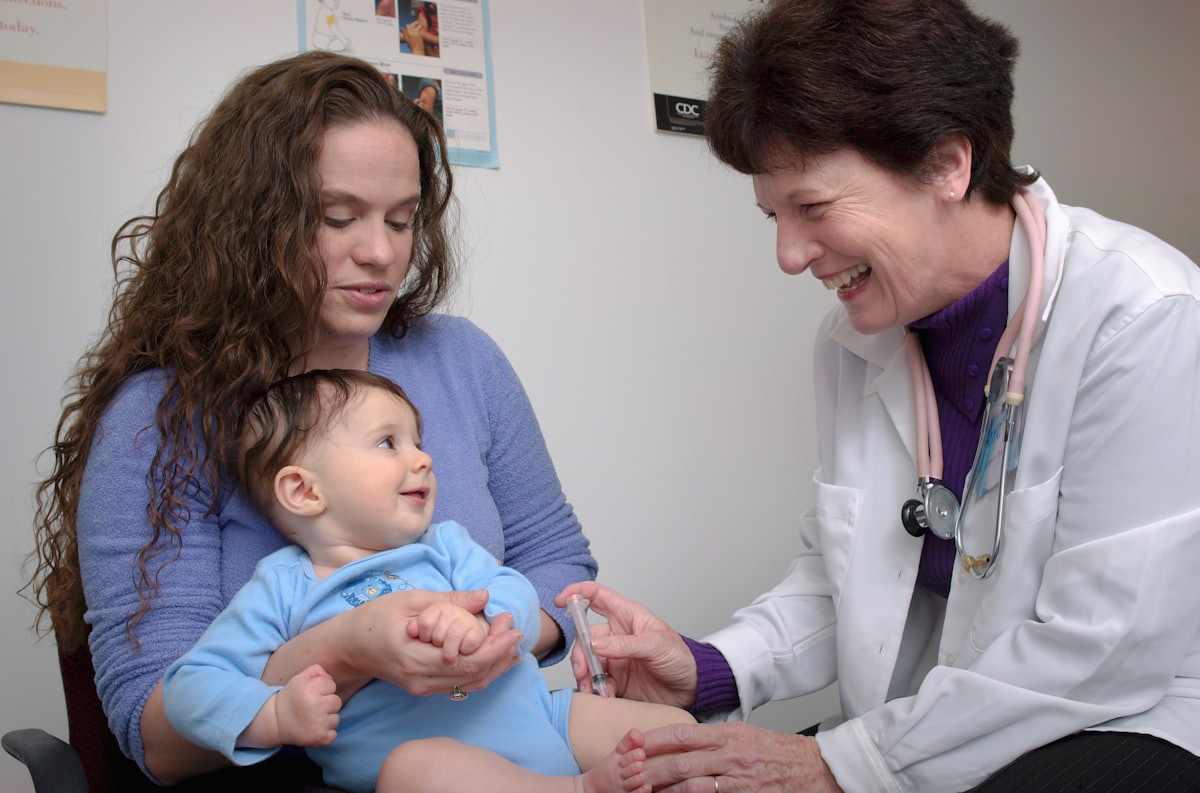
The first step toward an autism diagnosis in Utah is a developmental screening, and it often happens at a visit you’ve already scheduled. The American Academy of Pediatrics recommends general developmental screening at the 9-, 18-, and 30-month well-child visits, plus autism-specific screening at 18 and 24 months (CDC). Importantly, children should also be screened any time a parent or doctor has a concern, you never have to wait for a scheduled milestone visit to raise your hand.
If you’d like to start observing at home before that appointment, the CDC’s free “Learn the Signs. Act Early.” program offers a Milestone Tracker app and developmental-monitoring checklists in multiple languages (CDC). Bringing your own notes to a pediatrician makes the conversation faster and more concrete. For families in St. George, Washington, Hurricane, and across Southern Utah, this is the easiest, no-cost way to begin.
Know That Early Diagnosis Is Reliable, and Worth Pursuing
One of the biggest reasons families delay is the hope that a child will simply “grow out of” early differences, but the evidence says acting early is the better path. Per the CDC, “By age 2 years, a diagnosis by an experienced professional can be considered very reliable” (CDC). In other words, a careful evaluation in the toddler years is trustworthy, not premature.
The national picture shows there’s room to move sooner. The median age of earliest known autism diagnosis was 47 months, just under four years old (CDC MMWR). And only about half (50.3%) of 8-year-olds identified with autism had received a developmental evaluation by 36 months (CDC MMWR). A diagnosis is not a label that limits your child, it’s a key that opens doors to support, and getting it earlier simply means those supports can start earlier.
Get a Referral to a Qualified Evaluator for an Autism Diagnosis in Utah
The next step toward an autism diagnosis in Utah is a referral from your pediatrician to a clinician who can perform a formal evaluation. Under Utah Medicaid policy, the ASD diagnosis may be rendered by clinicians “authorized under the scope of their licensure and trained in the use and interpretation of the selected assessment tool” (Utah Medicaid Provider Manual). In practice, that often means a licensed clinical psychologist, a developmental pediatrician, or a child psychiatrist who is experienced with autism.
Utah families have several places to seek an evaluation. Options include hospital-based and university programs such as the University of Utah Huntsman Mental Health Institute autism clinic, as well as community providers like Kids on the Move. We’re listing these neutrally as starting points, no single clinic is “best” for every family, and wait times and eligibility vary by provider, so it’s worth confirming current availability, phone numbers, and intake requirements directly on each provider’s own page. For Southern Utah families, ask your pediatrician which evaluators serve Washington and Iron counties, and don’t hesitate to get on more than one list.
Understand the Evaluation Itself
A formal autism evaluation pulls together several sources of information rather than relying on a single test. A qualified clinician will typically gather a developmental history from you, observe your child directly using a validated diagnostic tool, and consider input from caregivers and sometimes teachers or therapists. The goal is a complete picture of how your child communicates, plays, and relates to the world.
Timelines for completing this process vary depending on provider availability and waitlists, so it’s wise to begin scheduling as soon as you have a concern. If you’ve started developmental monitoring at home, bring those notes, your everyday observations are genuinely useful data for the evaluator and can help the process move efficiently.
Use the Diagnosis to Unlock Coverage for Services
Once you have a valid diagnosis, it becomes the key that unlocks funding for autism services in Utah. Utah Medicaid states that “Autism spectrum disorder (ASD) related services are available to all eligible Medicaid members with a diagnosis of ASD, regardless of age” (Utah Medicaid). A valid ASD diagnosis is required before ABA services begin, and ABA therapy requires prior authorization (Utah Medicaid Provider Manual). As of July 1, 2023, adults are no longer excluded from Medicaid ABA services under S.B. 204, coverage now spans the lifespan (Utah ABA Providers Association).
That expansion has practical benefits for getting started sooner. As Deborah Bilder, MD, Professor of Psychiatry at the Huntsman Mental Health Institute, explained, “Young children covered by Utah Medicaid now have quicker access to autism diagnostic services because of the expanded range of accepted diagnostic tools” (University of Utah Health). If you have private insurance instead, the same principle applies: an autism diagnosis plus active coverage is what makes services like in-home ABA available.
Some Utah Context Worth Knowing
It helps to know how autism identification looks across our state. Among 8-year-olds in Utah, autism prevalence is about 1 in 37 (2.7%), compared with the national rate of 1 in 31 (3.2%) for data year 2022, or, in the CDC’s measure, 27.0 per 1,000 in Utah versus 32.2 per 1,000 across all ADDM communities (University of Utah Health; CDC MMWR). As Amanda Bakian, PhD, Associate Professor of Psychiatry at the Huntsman Mental Health Institute, put it, “Utah’s autism prevalence among both four and eight-year-old children remains considerably lower than the average across all ADDM communities” (University of Utah Health).
There’s also an encouraging trend toward earlier identification: prevalence among Utah 4-year-olds rose from 1.3% (2020) to 1.8% (2022), still below the national 4-year-old rate of 2.9% (University of Utah Health). Higher prevalence in younger children generally signals that families and providers are catching things sooner. (Note: Utah’s ADDM survey covered Salt Lake, Davis, and Tooele counties, so it reflects northern Utah, but the takeaway, that earlier identification is growing, matters for families statewide, including here in Southern Utah.)
Frequently Asked Questions
Where do I start to get my child evaluated for autism in Utah? Start with your pediatrician at a well-child visit, where developmental and autism-specific screening happens (the CDC recommends autism screening at 18 and 24 months, and any time there’s a concern). If the screening flags something, ask for a referral to a specialist for a formal evaluation (CDC).
Who can diagnose autism in Utah? Under Utah Medicaid policy, the ASD diagnosis may be rendered by clinicians authorized under the scope of their licensure and trained in the use and interpretation of the selected assessment tool, typically a licensed clinical psychologist, developmental pediatrician, or child psychiatrist experienced with autism (Utah Medicaid Provider Manual).
How long does the autism evaluation process take in Utah? It varies. Timelines depend on provider availability and waitlists, so the best move is to begin scheduling as soon as you have a concern and to consider getting on more than one provider’s list.
Does Utah Medicaid or insurance cover autism diagnosis and ABA therapy? Yes. Utah Medicaid covers ASD-related services for eligible members of any age who have a valid ASD diagnosis, and as of July 1, 2023, adults are included (Utah ABA Providers Association). ABA therapy requires prior authorization. With private insurance, an autism diagnosis plus active coverage similarly makes services available (Utah Medicaid).
At what age can autism be reliably diagnosed? Signs can appear before 18 months, and per the CDC, “By age 2 years, a diagnosis by an experienced professional can be considered very reliable” (CDC).
Ready When You Are
Once you have an autism diagnosis and active insurance coverage, the next step is finding support that fits your family’s daily life, and that’s where Ryse ABA Therapy comes in. We provide in-home and community-based ABA across Southern Utah, including St. George, Washington, Hurricane, Santa Clara, Ivins, La Verkin, and Cedar City, for ages 2 to 65. Our care is BCBA-led, family-first, play-based, and data-driven, and we have no waitlist, qualifying families can start right away rather than waiting months to begin. If you have an autism diagnosis and active coverage, call us at (385) 549-5656 to talk through your next steps. When we Ryse together, we achieve more.
Sources
- CDC, “Clinical Screening for Autism Spectrum Disorder”, https://www.cdc.gov/autism/hcp/diagnosis/screening.html
- CDC, “Developmental Monitoring and Screening” (Learn the Signs. Act Early.), https://www.cdc.gov/act-early/about/developmental-monitoring-and-screening.html
- CDC MMWR Surveillance Summaries, Vol. 74, SS-2 (2025), https://www.cdc.gov/mmwr/volumes/74/ss/ss7402a1.htm
- University of Utah Health / CTSI, “Autism Prevalence in Utah Remains Steady, Lower than Nation: Report”, https://ctsi.utah.edu/news/2025/08/autism-prevalence-utah-remains-steady-lower-nation-report
- Utah Medicaid (DHHS), ASD Related Services, https://medicaid.utah.gov/ltc-2/asd/
- Utah Medicaid Provider Manual, Autism Spectrum Disorder Services, https://medicaid-documents.dhhs.utah.gov/Documents/manuals/pdfs/Medicaid+Provider+Manuals/Autism+Spectrum+Disorder+Services/AutismSpectrumDisorder.pdf
- Utah ABA Providers Association, “Utah Medicaid to Begin Providing Autism Services to Adults” (S.B. 204, effective July 1, 2023), https://www.utahabaproviders.org/post/utah-medicaid-to-begin-providing-autism-services-to-adults