In-Home ABA Therapy: What to Expect During a Real Session
In-home ABA therapy: what to expect during a real session, who comes to your home, your role as a parent, and how Southern Utah families get started.
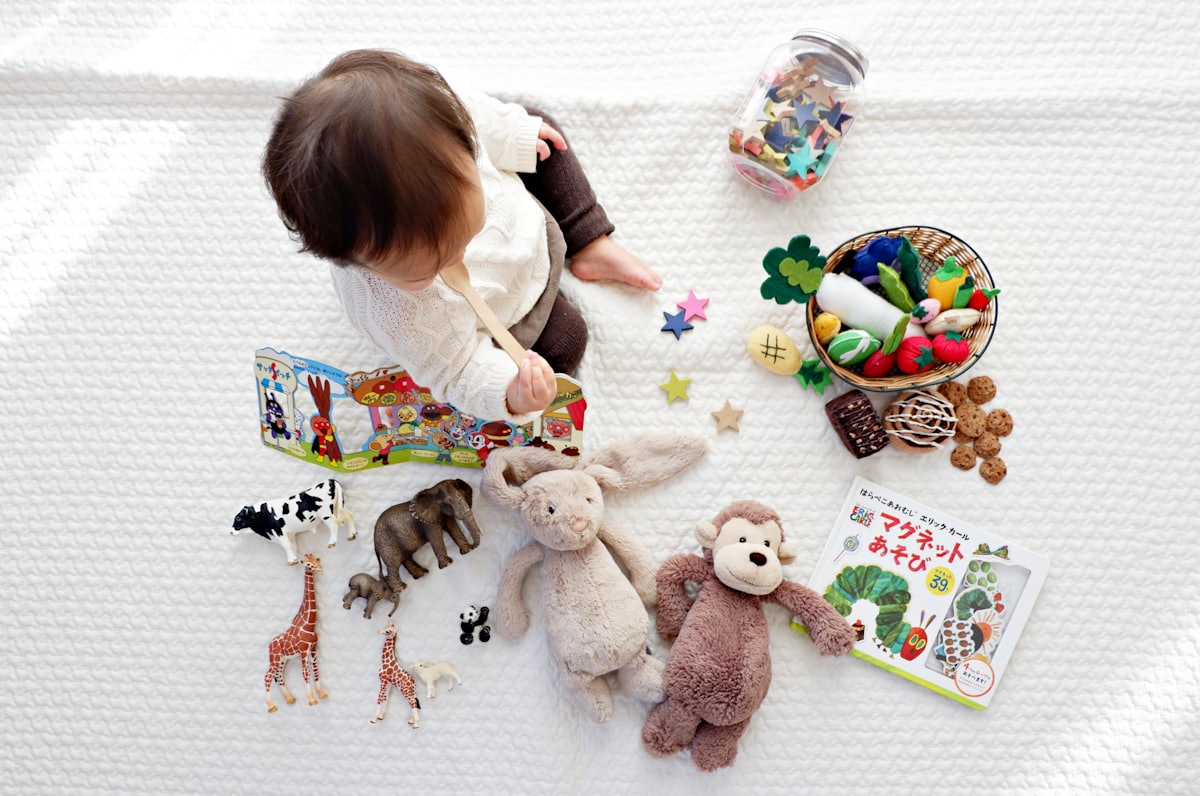
TL;DR: An in-home ABA session is your child learning real-life skills in the place they’re most comfortable, your living room, kitchen, or backyard. A registered behavior technician (RBT) comes to your home and works one-on-one with your child, following a plan designed and overseen by a board certified behavior analyst (BCBA). Some of the time looks like structured “table time,” and a lot of it looks like play, routines, and everyday moments turned into learning opportunities. You’re not a bystander, parents are trained to be part of it. Here’s what to expect.
If you’re a parent in Southern Utah searching for in-home aba therapy what to expect, you probably have a knot in your stomach. That’s completely understandable. Inviting a therapist into your home to work with your child is a big, personal step. This guide walks through what actually happens, who’s involved, and what’s expected of you, so the unknown feels a little smaller.
ABA is an evidence-based approach, and it meets your child where they are
ABA (Applied Behavior Analysis) is a well-established, evidence-based approach to supporting children with autism. According to Autism Speaks, “ABA is considered an evidence-based best practice treatment by the US Surgeon General and by the American Psychological Association.” The goal is “to increase behaviors that are helpful and decrease behaviors that are harmful or affect learning,” and a quality program can target communication and language, social skills, self-care like showering and toileting, play and leisure, motor skills, and academic readiness (Autism Speaks).
Autism itself is common, the CDC reports that “about 1 in 31 (3.2%) children aged 8 years has been identified with ASD” based on 2022 surveillance data, up from 1 in 36 in 2020. It “is reported to occur in all racial, ethnic, and socioeconomic groups” (CDC). If your family is navigating a new diagnosis, you are far from alone.
It’s also worth being honest about what the research shows. A 2023 meta-analysis of 11 studies (632 participants) found comprehensive ABA-based interventions produced a medium effect on intellectual functioning and a small effect on adaptive behavior, while effects on language abilities were not statistically significant (Eckes et al., BMC Psychiatry, 2023). ABA isn’t a cure or a guarantee, it’s a structured, individualized way to help your child build skills over time. We’d rather set honest expectations than make promises no one can keep.
In-home ABA therapy: what to expect during a session
The biggest myth about in-home aba therapy is that your child sits at a table doing drills all day. In reality, sessions blend structured teaching with naturally occurring learning. Autism Speaks notes that ABA is “provided in many different locations, at home, at school, and in the community,” and that “the person with autism will have many opportunities to learn and practice skills each day… in both planned and naturally occurring situations” (Autism Speaks).
In practice, that means a session in your St. George home might include a stretch of focused, structured activities, sometimes at a table, woven together with skill-building inside your child’s natural routines. Practicing requesting a snack at the kitchen counter. Working on toileting or handwashing in your actual bathroom. Taking turns with a sibling during play in the living room. Because the learning happens where your child lives, the skills tend to fit naturally into daily life rather than staying stuck in a clinic.
How long a session runs and how many hours per week your child receives depends on the individualized plan your BCBA builds, it varies with your child’s age, attention span, and goals. The early sessions often focus on building a comfortable, trusting relationship before diving into harder work. That ramp-up is normal and intentional.
Who comes to your home, and how you know they’re qualified
The person delivering most of your child’s in-home sessions is a registered behavior technician (RBT), working under a supervising BCBA. This two-tier structure is a built-in quality safeguard, and it’s one of the most reassuring things to understand about in-home aba therapy what to expect.
Autism Speaks explains that “a qualified and trained behavior analyst (BCBA) designs and directly oversees the program,” while “therapists, or registered behavior technicians (RBTs)… are trained and supervised by the BCBA” and “work directly with children and adults with autism to practice skills” (Autism Speaks).
The credentials are defined by the Behavior Analyst Certification Board (BACB): an RBT is “a paraprofessional in behavior analysis who practices under the close, ongoing supervision of a BCBA,” and a BCBA is “a graduate-level professional in behavior analysis who is able to practice independently and provide supervision for BCaBAs and RBTs” (BACB).
That supervision isn’t a formality. Per the BACB’s RBT Handbook, an RBT must “obtain ongoing supervision for a minimum of 5% of the hours you spend providing behavior-analytic services each calendar month,” and supervision “must include at least two face-to-face, real-time contacts per month (i.e., supervision may not occur over the phone or via email)” (BACB RBT Handbook, PDF). So even when an RBT is in your home, an experienced clinician is actively involved in your child’s care. At Ryse, our programs are led and overseen by our Clinical Director, Noah Rasmussen, BCBA.
Your role as a parent: you’re part of the team
You are not expected to disappear during sessions, you’re expected to be part of them. Parent and caregiver involvement is a core feature of good ABA, not an afterthought. Autism Speaks states that “parents, family members and caregivers receive training so they can support learning and skill practice throughout the day” (Autism Speaks).
In real terms, your BCBA and RBT will coach you on how to encourage the same skills when therapy isn’t in session, how to prompt a request, how to respond consistently, how to turn a bedtime or mealtime routine into a learning moment. This is one of the quiet superpowers of in-home therapy: the people who spend the most time with your child get equipped to help them grow every day, not just during scheduled hours. If the idea of “doing it wrong” worries you, take a breath, coaching you is literally part of the job.
How coverage works for Southern Utah families
In-home ABA is often accessible through insurance, and Utah families have an established pathway. Utah Medicaid covers ASD-related services rooted in ABA, for eligible members under 21, this runs through the EPSDT program, and a valid ASD diagnosis from a clinician “authorized under the scope of their licensure to render diagnoses and trained on the use of the assessment tools specified in the manual” is required. The covered, ABA-based methods named in the manual include Discrete Trial Training, Prompting, Shaping and Fading, Generalization, Incidental Teaching, Reinforcement, Antecedent-Based Interventions, Pivotal Response Training, and a Social Skills Package (Utah Medicaid Provider Manual).
At Ryse ABA Therapy, services require an autism diagnosis and active insurance coverage. Because the specifics vary by plan, the simplest next step is to verify your benefits, and we’re glad to help you understand what your coverage looks like.
Frequently Asked Questions
How long is an in-home ABA session, and how many hours per week will my child have? There’s no single right answer, session length and weekly hours are set by your child’s individualized plan and depend on their age, attention span, and goals. Your BCBA will design a schedule that fits your child and your family, and adjust it as your child progresses.
What actually happens during a session, does my child just sit at a table? No. Sessions mix structured activities with learning inside everyday routines. Autism Speaks notes that skills are practiced “in both planned and naturally occurring situations” (Autism Speaks), so your child learns at the table and during play, meals, and self-care routines in your home.
Who comes to my home, and are they qualified? An RBT delivers most sessions under a supervising BCBA who designs and oversees the plan. RBTs practice “under the close, ongoing supervision of a BCBA” (BACB) and must obtain supervision for “a minimum of 5% of the hours you spend providing behavior-analytic services each calendar month” (BACB RBT Handbook, PDF).
Do I have to be present, and what is my role as a parent? Your involvement matters. Per Autism Speaks, “parents, family members and caregivers receive training so they can support learning and skill practice throughout the day” (Autism Speaks). You’ll be coached to reinforce skills during everyday moments.
Does insurance or Utah Medicaid cover in-home ABA? Often, yes. Utah Medicaid covers ABA-based ASD services for eligible members, for those under 21, through the EPSDT program, with a valid ASD diagnosis required (Utah Medicaid). Coverage details vary by plan, so verify your specific benefits, we can help.
Ready to start? There’s no waitlist at Ryse
If your family is ready, you shouldn’t have to wait months to begin. Ryse ABA Therapy provides in-home and community-based ABA across Southern Utah, St. George, Washington, Hurricane, Santa Clara, Ivins, La Verkin, and Cedar City, and we have no waitlist, so families can start right away. With an autism diagnosis and active insurance coverage, we can help you take the next step today. Call us at (385) 549-5656 to talk it through. When we Ryse together, we achieve more.
Sources
- CDC, Data and Statistics on Autism Spectrum Disorder, https://www.cdc.gov/autism/data-research/index.html
- Autism Speaks, Applied Behavior Analysis (ABA), https://www.autismspeaks.org/applied-behavior-analysis
- Behavior Analyst Certification Board (BACB), https://www.bacb.com/
- BACB, Registered Behavior Technician (RBT) Handbook (PDF), https://www.bacb.com/wp-content/uploads/2021/09/RBTHandbook_210915-3.pdf
- Eckes T, Buhlmann U, Holling H-D, Möllmann A. “Comprehensive ABA-based interventions in the treatment of children with autism spectrum disorder, a meta-analysis.” BMC Psychiatry 23, 133 (2023), https://link.springer.com/article/10.1186/s12888-022-04412-1 (full text: https://pmc.ncbi.nlm.nih.gov/articles/PMC9983163/)
- Utah Medicaid Provider Manual, Autism Spectrum Disorder Services, https://medicaid-manuals.dhhs.utah.gov/Autism_Spectrum_Services/autism_spectrum_services.htm