In-Home vs. Center-Based ABA: Which Is Right for Your Child?
In-home vs center-based ABA: a warm, honest guide for Southern Utah families on choosing the setting that fits your child and your routine.
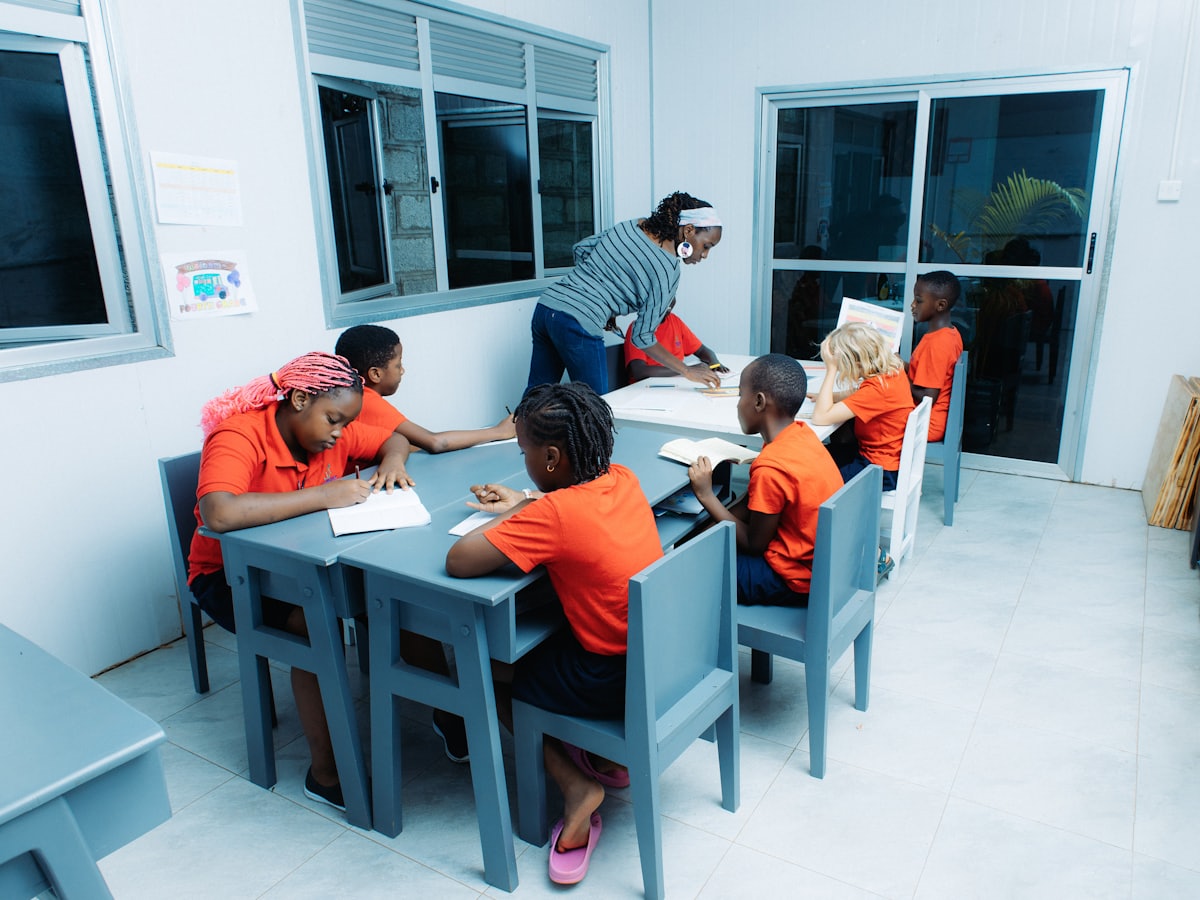
Short answer: There is no universal “winner” between in-home and center-based ABA. The research that matters most points to consistent, sufficient therapy hours and individualized programming, not to one setting beating the other. The right choice for the in-home vs center-based ABA question depends on your child’s needs, your family’s routine, and your goals. Both are legitimate, evidence-based delivery models, and a thoughtful clinical team can help you pick the one that fits, or blend them over time.
If you are reading this, you are likely a parent weighing a big decision and feeling some anxiety. That is completely understandable, and you are not alone. About 1 in 31 children aged 8 years has been identified with autism spectrum disorder, according to the CDC’s ADDM Network (2022 surveillance year), and Utah is one of the network’s surveillance sites. Many families across Washington County and Cedar City are walking this same path. Let’s work through the setting question together, calmly and honestly.
ABA is evidence-based, and it can be delivered in more than one setting
The first thing to know is that you are choosing how to deliver a well-supported therapy, not gambling on an unproven one. “ABA is considered an evidence-based best practice treatment by the US Surgeon General and by the American Psychological Association,” and “more than 20 studies have established that intensive and long-term therapy using ABA principles improves outcomes for many but not all children with autism” (Autism Speaks).
Just as important: ABA is “provided in many different locations – at home, at school, and in the community,” and can be “home-based or clinic-based” (Autism Speaks). So the in-home vs center-based ABA decision is a normal fork that many families face, not a make-or-break gamble. For Southern Utah families in St. George, Washington, Hurricane, and the surrounding communities, both kinds of care are real options.
What “in-home” ABA looks like
In-home ABA brings the therapy into your child’s natural, everyday environment. One of the recognized clinical strengths of working at home is generalization. ABA emphasizes “generalization of skills learned in clinical and educational settings in the natural environment,” and parents and caregivers “receive training so they can support learning and skill practice throughout the day” (Autism Speaks).
In plain terms: when a skill is taught where your child actually lives, at the kitchen table, during the bedtime routine, in the backyard, there are natural opportunities to practice it in context. In-home care also tends to fold into family life more easily: siblings are around, daily routines are part of the work, and caregivers get hands-on coaching they can use long after the session ends. For families with travel constraints across Washington County or out in Cedar City, having a provider come to you can also remove a real logistical barrier.
What “center-based” ABA looks like
Center-based ABA happens in a clinic or dedicated therapy space. Families often choose it for the structured environment, the access to peers, and a setting that can feel like a stepping stone toward a classroom. Being around other children can create natural opportunities to practice social and play skills, and a clinic space is designed to minimize household distractions.
A fair note on honesty here: you may read claims online that center-based ABA produces “faster” gains. Those claims tend to come from provider blogs rather than peer-reviewed research, so we won’t present them as proven. The structured environment, peer interaction, and school-readiness focus are commonly observed strengths of the center model, described as trade-offs to weigh, not as a guaranteed advantage.
In-home vs center-based ABA: what the research says actually drives progress
Here is the part that should take pressure off the in-home vs center-based ABA decision: the strongest evidence points to how much and how consistent the therapy is, not where it happens. In a peer-reviewed study of 1,468 children with ASD (ages 18 months to 12 years), treatment intensity and duration together accounted for roughly 50–67% of the variance in mastered learning objectives across eight developmental domains, with duration showing stronger effects than intensity (Linstead et al., Translational Psychiatry, 2017).
That study looked at hours and duration, not setting. So the most reliable takeaway is this: what matters most is consistent, sufficient therapy hours over time, and that can be achieved in either setting. A good program also won’t be cookie-cutter. As Autism Speaks puts it, “Good ABA programs for autism are not ‘one size fits all,’” and “each program is written to meet the needs of the individual learner,” customized to “each learner’s skills, needs, interests, preferences and family situation” (Autism Speaks).
Starting matters more than getting the setting “perfect”
If there is one thing not to over-agonize about, it is timing. “ABA works with people of all ages, but it is best to start as early as possible,” and most children begin between ages 2 and 6 (Children’s Hospital of Philadelphia). A great, individualized program can be adjusted as you learn what works for your child. Beginning sooner, in whichever setting is the better fit today, generally serves your child better than waiting months to feel certain about the room the therapy happens in.
Frequently Asked Questions
What’s the difference between in-home and center-based ABA therapy? In-home ABA delivers therapy in your child’s everyday environment, which supports practicing skills in the natural settings where they’ll be used and lets caregivers receive hands-on coaching throughout the day (Autism Speaks). Center-based ABA happens in a clinic, offering a structured space and access to peers. Both deliver the same evidence-based therapy in different environments.
Is in-home or center-based ABA more effective for my child? The research points to consistent, sufficient therapy hours and individualized programming as the strongest drivers of progress, not one setting over the other (Linstead et al., 2017). The most effective choice is the one your child and family can sustain and that fits your goals, which a BCBA can help you identify.
Which setting is better for building social skills or preparing for school? A center can offer a structured, peer-rich environment that some families value for social practice and school readiness, while in-home care supports generalizing skills into real daily routines (Autism Speaks). Many families address both goals over time, sometimes by blending or transitioning between settings.
Does insurance or Utah Medicaid cover in-home ABA therapy? Utah Medicaid makes ASD-related services available to eligible members with an ASD diagnosis, regardless of age, with ABA delivered under the Early and Periodic Screening, Diagnostic and Treatment (EPSDT) benefit (Utah DHHS Medicaid). As of July 1, 2023, Utah Medicaid removed the age caps that had excluded adults from these services, implementing S.B. 204 from the 2023 legislative session (Utah ABA Providers). At Ryse, an autism diagnosis and active insurance coverage are required; we’re glad to help you understand your specific benefits.
Can we combine both, start in a center and transition home (a hybrid model)? Yes. Because ABA can be delivered at home, in a clinic, and in the community (Autism Speaks), and because programs are written for the individual learner, many families adjust the setting as their child grows. A BCBA can map a plan that flexes with your child’s progress and your family’s routine.
Ready to start, with no waitlist
Whichever setting feels right, the most important step is starting. At Ryse ABA Therapy, we provide in-home and community-based ABA across Southern Utah, St. George, Washington, Hurricane, Santa Clara, Ivins, La Verkin, and Cedar City, for ages 2 to 65, led by our Clinical Director Noah Rasmussen, BCBA. Our care is family-first, play-based, and data-driven, built around your child as an individual. And because we know that waiting is the hardest part, we have no waitlist, families start right away. When we Ryse together, we achieve more. Call us at (385) 549-5656 to talk through whether in-home ABA is the right fit for your family.
Sources
- CDC, Data and Statistics on Autism Spectrum Disorder, https://www.cdc.gov/autism/data-research/index.html
- CDC ADDM Network MMWR Surveillance Summary, 16 Sites, 2022 (Utah surveillance site), https://www.cdc.gov/mmwr/volumes/74/ss/ss7402a1.htm
- Autism Speaks, Applied Behavior Analysis (ABA), https://www.autismspeaks.org/applied-behavior-analysis
- Linstead E, et al. “An evaluation of the effects of intensity and duration on outcomes across treatment domains for children with autism spectrum disorder.” Translational Psychiatry, 2017, https://pmc.ncbi.nlm.nih.gov/articles/PMC5639250/
- Children’s Hospital of Philadelphia (CHOP), Applied Behavior Analysis (ABA) for Children With Autism, https://www.chop.edu/health-resources/applied-behavior-analysis-aba-children-autism
- Utah DHHS Medicaid, ASD Related Services, https://medicaid.utah.gov/ltc-2/asd/
- Utah Medicaid Autism Spectrum Services Provider Manual, https://medicaid-manuals.dhhs.utah.gov/Autism_Spectrum_Services/autism_spectrum_services.htm
- Utah ABA Providers, Utah Medicaid to Begin Providing Autism Services to Adults (S.B. 204, eff. July 1, 2023), https://www.utahabaproviders.org/post/utah-medicaid-to-begin-providing-autism-services-to-adults