ABA Parent Training: Why It Matters and How Coverage Works in Utah
ABA parent training helps skills stick at home. Here's what the research shows, what you'll actually do, and how coverage works in Utah.
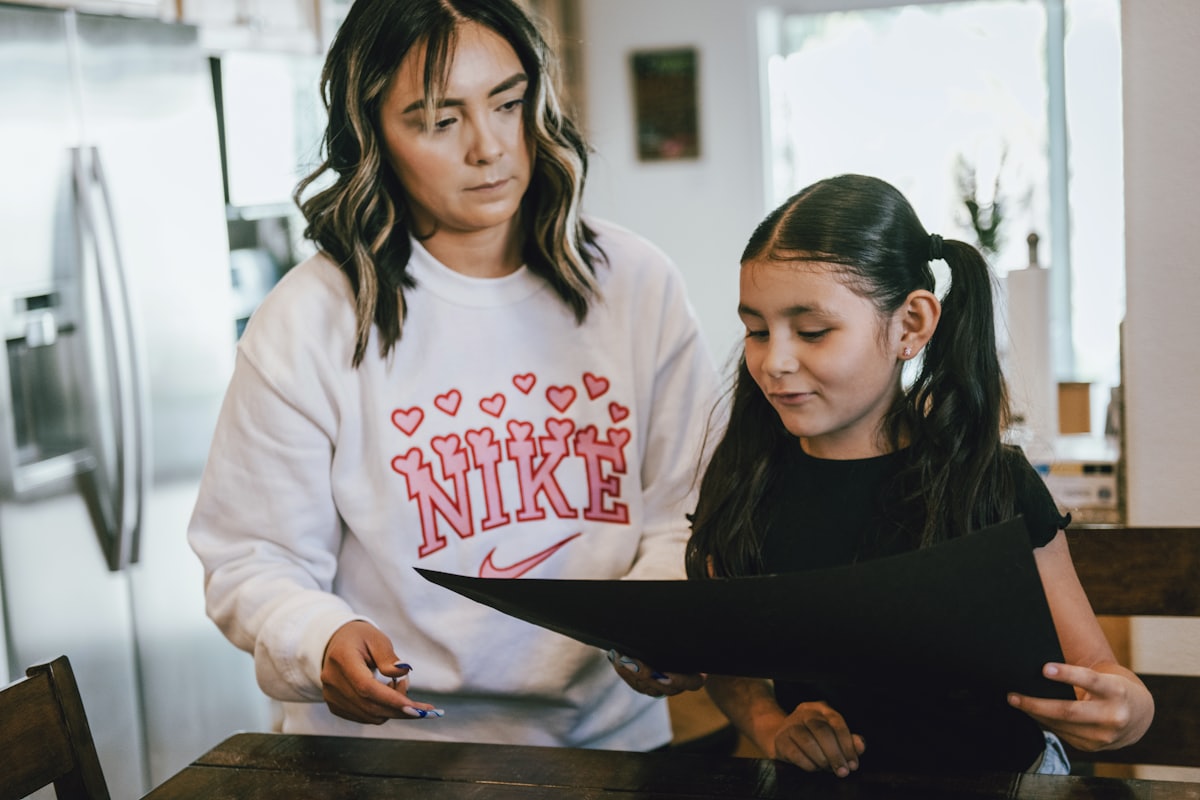
Short answer: parent training is where the progress sticks. ABA parent training is the part of Applied Behavior Analysis where you, the caregiver, learn the same strategies your child’s team uses, so the skills your child builds in session keep growing during dinner, bath time, the grocery run, and every ordinary moment in between. Research consistently points to meaningful gains when parents are trained and involved, and quality ABA treats caregiver training as a built-in component, not an optional add-on. Below, we’ll walk through why it works, what you’ll actually be asked to do, and how coverage works for families here in Southern Utah, written for parents who are tired, hopeful, and looking for a clear path forward.
ABA parent training is what carries skills out of the therapy room and into your home
The whole point of ABA is for skills to show up in real life, not just during a session. One of ABA’s core goals is generalization, your child using a skill in new settings, with different people, woven into everyday routines (Autism Speaks, Applied Behavior Analysis (ABA)). A child might learn to ask for a break or to take turns beautifully while their technician is present, but if that skill never makes it to the living room or the playground, it hasn’t really landed.
That’s exactly the gap ABA parent training is built to close. When caregivers are trained, the strategies get reinforced throughout the day rather than only during scheduled hours. As Autism Speaks puts it, “Parents, family members and caregivers receive training so they can support learning and skill practice throughout the day” (Autism Speaks, Applied Behavior Analysis (ABA)). You become a steady, loving source of practice, which is something no therapist, however skilled, can be at 6:45 on a Tuesday morning.
The research consistently points to meaningful gains when parents are involved
When parents are trained to deliver ABA strategies, children tend to make measurable progress across a wide range of areas. A 2023 meta-analysis pooling 51 randomized controlled trials with 2,895 children (average age 5.5) found “moderately strong overall benefits,” with an overall effect size of g = 0.553 (Effects of Parent-Implemented Interventions on Outcomes of Children with Autism: A Meta-Analysis, PMC). Breaking it down by area: positive behavior and social skills came in at g = 0.603 (30 studies), reductions in maladaptive behavior at g = 0.519 (20 studies), language and communication at g = 0.545 (19 studies), and adaptive or life skills at g = 0.239 (6 studies).
What’s reassuring in that review is its breadth. The authors concluded that “PIIs with children with ASD tend to be effective across a variety of circumstances,” holding up regardless of the specific intervention type, the dosage, or the child’s demographics (Effects of Parent-Implemented Interventions, PMC). In other words, this isn’t a finding that only works for one kind of family or one kind of kid.
Structured parent training can also make a real dent in the behaviors that wear families down. In a large randomized clinical trial (Bearss et al., 2015; n = 180, published in JAMA), a structured parent-training program produced a 47.7% decline in irritability scores (on the Aberrant Behavior Checklist–Irritability subscale), compared with a 31.8% decline for a parent-education control group (Effect of Parent Training vs Parent Education on Behavioral Problems in Children With Autism Spectrum Disorder, JAMA). It’s worth being honest about the limits, though: the trial’s own authors noted the clinical significance of the improvement was less certain than the statistical effect, and the broader literature in this area remains relatively young. The effects across this body of work are moderate and meaningful, not magic, and not the same for every child.
Parent training isn’t an extra, it’s part of what makes ABA, ABA
Caregiver involvement is woven into the standards that define quality ABA. The Council of Autism Service Providers (CASP) practice guidelines state that “caregivers must receive training and consultation throughout treatment, discharge, and follow-up,” and that a client’s progress is affected by how well caregivers can support treatment goals outside of treatment hours (CASP, Applied Behavior Analysis Treatment of Autism Spectrum Disorder: Practice Guidelines). So if a program treats parent training as optional fluff, that’s a sign the program isn’t following the field’s own standards.
This sits inside a broader, well-established evidence base. ABA “is considered an evidence-based best practice treatment by the US Surgeon General and by the American Psychological Association,” and more than 20 studies show that intensive, long-term ABA can improve outcomes “for many but not all children” (Autism Speaks, Applied Behavior Analysis (ABA)). We say that last part plainly on purpose: ABA helps many children, not all, and the right program respects your child as an individual rather than promising a guaranteed result. Parent training fits this honest picture, it’s one of the most reliable ways to help good progress travel home with you.
What you’ll actually be asked to do (and how it feels day to day)
In practice, ABA parent training usually looks like a BCBA or trained team member coaching you through real situations. You might watch a strategy modeled, try it yourself while your child’s clinician gives gentle feedback, and then practice it in your own routines between sessions. The goal is never to turn you into a therapist or to fill your day with homework, it’s to help you respond consistently in the moments that already happen: transitions, requests, big feelings, mealtimes, bedtime.
For families across St. George, Washington, Hurricane, Cedar City, and the rest of Southern Utah, this is also what makes in-home and community-based ABA so practical. When the coaching happens where your child actually lives and plays, the skills have a much shorter distance to travel. One small telehealth study is illustrative here: all five parent-child dyads reached at least 80% implementation fidelity within one to two coaching sessions, and most sustained that level on follow-up probes (A Telehealth Approach to Parent Training, PMC). With only five families, it’s not something to generalize from, but it hints at something many parents discover: you may be more capable of this than you expect, and it can come together faster than you fear.
Frequently Asked Questions
What is ABA parent training, and what will I actually be asked to do? ABA parent training is structured coaching that teaches you the same evidence-based strategies your child’s team uses, so you can support skill practice throughout the day (Autism Speaks, Applied Behavior Analysis (ABA)). In practice, you’ll observe strategies, try them with feedback, and weave them into everyday routines, transitions, requests, mealtimes, and managing big feelings. The aim is consistency, not turning you into a clinician.
Does parent training really improve my child’s progress, or is direct therapy enough on its own? The research consistently points to meaningful gains when parents are trained and involved. A 2023 meta-analysis of 51 randomized controlled trials (2,895 children) found “moderately strong overall benefits” (overall g = 0.553), including gains in social skills, communication, and reductions in challenging behavior (Effects of Parent-Implemented Interventions on Outcomes of Children with Autism, PMC). Direct therapy matters, but parent training is what helps those skills generalize into your home.
How much time does parent training take each week? The CASP practice guidelines describe caregiver training and consultation as a component that continues throughout treatment, discharge, and follow-up (CASP, Applied Behavior Analysis Treatment of Autism Spectrum Disorder: Practice Guidelines). The specific amount is tailored to your family and your child’s plan. Much of the “practice” happens inside routines you’re already doing, rather than as separate homework.
Will my insurance or Utah Medicaid cover parent training as part of ABA? For many families, yes. Utah Medicaid covers ABA-based services for children with an autism diagnosis under the EPSDT benefit, and covered services include diagnostic assessment, direct therapy, supervision, and family/caregiver training (Utah Medicaid Provider Manual, Autism Spectrum Disorder Services; Utah DHHS Medicaid, ASD Related Services). To access ABA services, families generally need an autism diagnosis and active coverage. We’re glad to help you understand what your specific plan requires.
Can parent training be done over telehealth, from home? Often, yes. Utah Medicaid allows ABA-based services, including caregiver-focused services, to be delivered via telehealth (Utah Medicaid Provider Manual, Autism Spectrum Disorder Services). Telehealth coaching has shown promise in small studies, and it can be a convenient option for busy families, though the right format depends on your child’s needs and your team’s recommendations.
You don’t have to wait to get started
If your family is in Washington County or Iron County, St. George, Washington, Hurricane, Santa Clara, Ivins, La Verkin, or Cedar City, Ryse ABA Therapy provides in-home and community-based ABA built around your real routines, with parent training woven in from the start. We’re family-first, BCBA-led, and play-based, and we believe you are one of the most important people on your child’s team. There’s no waitlist here, so you can begin right away once an autism diagnosis and active coverage are in place. Call us at (385) 549-5656 to talk it through with a real person. When we Ryse together, we achieve more.
Sources
- Autism Speaks, Applied Behavior Analysis (ABA): https://www.autismspeaks.org/applied-behavior-analysis
- Effects of Parent-Implemented Interventions on Outcomes of Children with Autism: A Meta-Analysis (PMC): https://pmc.ncbi.nlm.nih.gov/articles/PMC10539413/
- Bearss et al. (2015), Effect of Parent Training vs Parent Education on Behavioral Problems in Children With Autism Spectrum Disorder: A Randomized Clinical Trial, JAMA (PubMed): https://pubmed.ncbi.nlm.nih.gov/25898050/
- CASP, Applied Behavior Analysis Treatment of Autism Spectrum Disorder: Practice Guidelines (Council of Autism Service Providers): https://www.casproviders.org/asd-guidelines/
- Utah Medicaid Provider Manual, Autism Spectrum Disorder Services: https://medicaid-manuals.dhhs.utah.gov/Autism_Spectrum_Services/autism_spectrum_services.htm
- Utah DHHS Medicaid, ASD Related Services: https://medicaid.utah.gov/ltc-2/asd/
- A Telehealth Approach to Parent Training (PMC, n=5, illustrative only): https://pmc.ncbi.nlm.nih.gov/articles/PMC8961090/