Play Based ABA Therapy: How Play Becomes Powerful Learning
Play based ABA therapy turns games into real learning. See how naturalistic, play-driven ABA helps autistic kids in Southern Utah build skills.
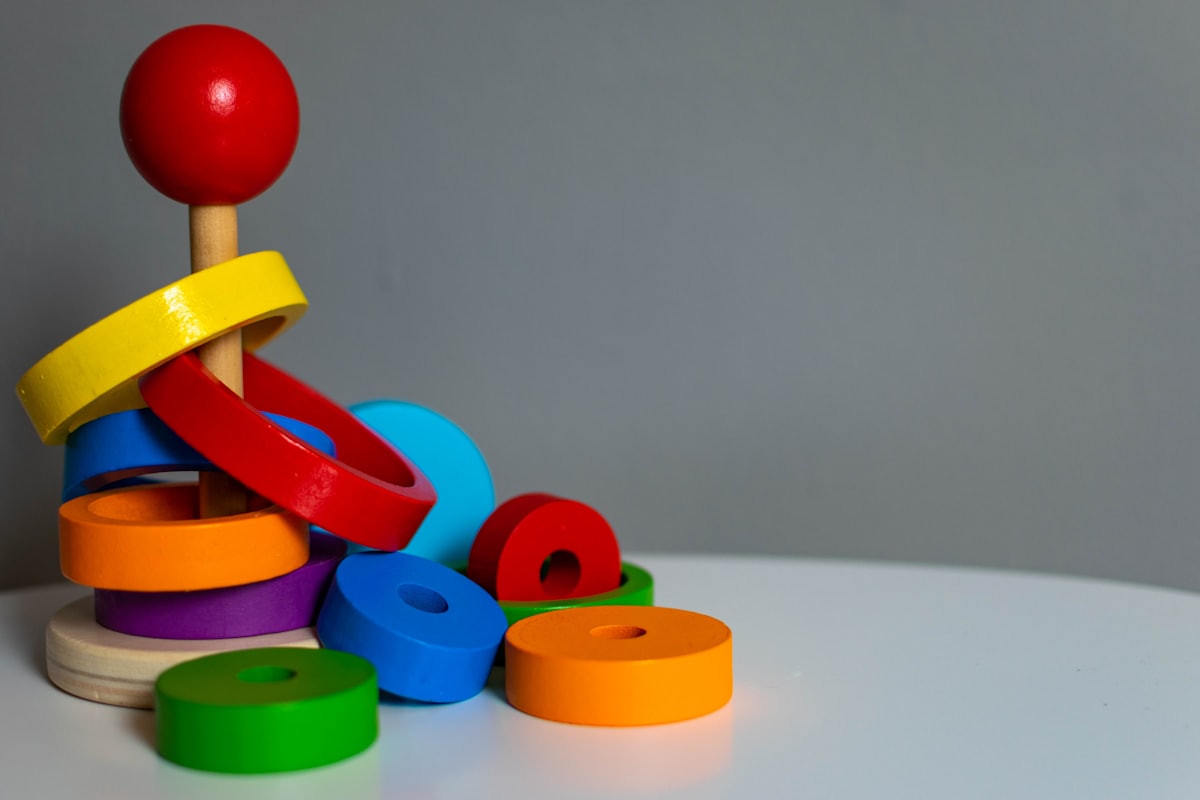
The short answer: Play based ABA therapy uses your child’s favorite games, toys, and everyday moments as the actual teaching tool, not a break from teaching. Researchers call this family of approaches Naturalistic Developmental Behavioral Interventions (NDBIs), and they’re “implemented in natural settings, involve shared control between child and therapist, utilize natural contingencies, and use a variety of behavioral strategies to teach developmentally appropriate and prerequisite skills” (Schreibman et al., 2015, Journal of Autism and Developmental Disorders). If you’ve pictured ABA as a child sitting at a table drilling flashcards, this post is for you. Modern, play-based ABA looks a lot more like joyful, intentional play, and that’s exactly what makes it effective.
Play-based ABA means the play is the lesson, not a reward for finishing one
In play based ABA therapy, structured play is the teaching method itself. The research term for this is NDBI, which Schreibman and colleagues describe as “the merging of applied behavioral and developmental sciences”, integrating “principles identified by developmental science with ABA principles” (Schreibman et al., 2015). In practical terms, that means a session might look like building a block tower, playing with bubbles, or running a pretend grocery store. Inside those moments, your child is learning to request, imitate, take turns, point, share attention, and communicate.
What sets this apart from older ABA approaches is how child-led it is. NDBIs are “more child-directed than previous ABA approaches” and “involve intrinsic rewards for learning and participating,” featuring “child-directed teaching strategies, such as use of child-preferred materials” (Schreibman et al., 2015). When your child is genuinely interested in what’s in front of them, motivation comes built in. We follow their lead, then thoughtfully weave learning opportunities into the activities they already love. For families across Southern Utah, this often happens right on the living room floor, where children are most comfortable.
A well-known play-based model shows what this looks like in practice
One of the clearest examples of play-based ABA in action is the Early Start Denver Model (ESDM). Autism Speaks describes ESDM as an approach that is “play-based, relationship-focused and uses the principles of Applied Behavioral Analysis (ABA)” (Autism Speaks). It was designed for “children 12 months through late preschool age” and co-developed by researchers Geri Dawson, PhD and Sally Rogers, PhD.
ESDM is worth knowing about because it isn’t just a nice idea, it “has been validated in a randomized, controlled trial” (Autism Speaks). That matters for any parent asking the fair question, “Is this actually helping, or is my child just playing?” The answer from the science is that for many young children, warm, play-based, relationship-centered teaching is a legitimate, studied path to skill-building, not a watered-down version of therapy.
The research base behind play based ABA therapy is genuinely strong
Play-based ABA is backed by real evidence, especially for young children. Schreibman and colleagues note that NDBIs “enjoy a strong research base that substantiates their efficacy for improving meaningful outcomes in young children with ASD,” with effectiveness shown particularly for “communication, language and social behavior” (Schreibman et al., 2015).
We’re careful not to overpromise, no honest provider can guarantee a specific result, and every child’s path is their own. But it’s reassuring to know that the playful, joyful, child-led approach you’d naturally want for your kid is also the one with serious science behind it. The “natural contingencies” the research describes simply mean that learning is rewarded by real-life outcomes: ask for the bubbles, and the bubbles appear. That connection feels obvious and meaningful to a child, which helps skills stick and generalize beyond the therapy session.
Starting early matters, and your toddler is not “too young”
Acting early is one of the most powerful things a family can do. According to the CDC, “1 in 31” eight-year-olds are estimated to have autism, and “1 in 6” children ages 3–17 have a developmental disability (CDC). Developmental concerns are common, and parents paying close attention are doing exactly the right thing.
The CDC is also clear about timing: “When developmental concerns are identified early, and children and families receive early intervention or other needed services, children have better outcomes” (CDC). They specifically discourage a “wait and see” approach, noting that “any missed milestone or concern should prompt discussion or action” (CDC). And because models like ESDM are designed for children as young as “12 months through late preschool age” (Autism Speaks), a young toddler is often a great fit for play-based work, not too young at all.
Here in Utah, families with very young children also have a free public resource. The state’s Baby Watch Early Intervention Program exists “to enhance early growth and development in infants and toddlers, who have developmental delays or disabilities,” and notably, “all services take place in the child’s natural environment (home, child care, etc.)” (Utah DHHS). Families can “contact your local EI program to request a FREE evaluation for early intervention services” (Utah DHHS). That natural-environment philosophy is the same one that makes in-home, play-based ABA feel so right for kids.
You’re a teammate, not a spectator
One of the best parts of play-based ABA is that you’re invited in. Because so much of the learning happens through everyday play and routines, your involvement is part of what makes it work. In the ESDM model, for example, “parental involvement is a crucial part” of the program, and the instructor will “explain and model the strategies for you to use at home” (Autism Speaks).
At Ryse, we lean fully into this. Our BCBA-led team coaches caregivers right alongside the child, so the playful strategies that work during a session keep working at bath time, in the car, and at the dinner table. You don’t drop your child off and hope for the best, you become a confident part of their progress. For families in St. George and across Washington and Iron Counties, that home-based, family-first approach means support fits into your real life.
Frequently Asked Questions
What is play-based ABA therapy, and how is it different from traditional ABA? Play-based ABA uses natural play and your child’s preferred activities as the teaching tool. The research family it belongs to, NDBIs, is “more child-directed than previous ABA approaches” and uses “child-directed teaching strategies, such as use of child-preferred materials” (Schreibman et al., 2015). Compared with older, more table-and-drill formats, it shares control between child and therapist and embeds learning into real moments.
Is play-based ABA actually effective, or is it just playing? It’s effective and studied. NDBIs “enjoy a strong research base that substantiates their efficacy for improving meaningful outcomes in young children with ASD,” especially for “communication, language and social behavior” (Schreibman et al., 2015). The play-based ESDM model “has been validated in a randomized, controlled trial” (Autism Speaks).
At what age should my child start, and isn’t my toddler too young? Earlier is generally better, and toddlers are often a great fit. The CDC says “any missed milestone or concern should prompt discussion or action” (CDC). Play-based models like ESDM are designed for children “12 months through late preschool age” (Autism Speaks), and Utah’s Baby Watch program serves infants and toddlers in their natural environment (Utah DHHS).
Will I be involved, or do I just drop my child off? You’re very much involved. In play-based models, “parental involvement is a crucial part” of the program, and your provider will “explain and model the strategies for you to use at home” (Autism Speaks). At Ryse, caregiver coaching is built into the work.
Does insurance or Utah Medicaid cover it? Coverage exists for eligible families. Utah Medicaid covers ABA therapy for members diagnosed with autism through the EPSDT (Early and Periodic Screening, Diagnostic, and Treatment) benefit, which generally serves individuals under age 21; eligibility requires a valid ASD diagnosis, and ABA services require prior authorization (Utah Medicaid, ASD Related Services). Utah’s Baby Watch program also offers a free evaluation for young children (Utah DHHS). Ryse accepts insurance; an autism diagnosis and active coverage are required to begin.
Ready to turn play into progress?
If your child loves to play, and what child doesn’t?, they already have everything they need to start learning through play based ABA therapy. At Ryse ABA Therapy, our BCBA-led team brings warm, personalized, data-driven, in-home and community-based care to families across Southern Utah, including St. George, Washington, Hurricane, Santa Clara, Ivins, La Verkin, and Cedar City. Best of all, there’s no waitlist, when families are ready, we’re ready, so you don’t lose precious early time waiting in a queue.
Call us today at (385) 549-5656 to talk through your child’s needs and how to get started. When we Ryse together, we achieve more.
Sources
- Schreibman, L., et al. (2015). Naturalistic Developmental Behavioral Interventions: Empirically Validated Treatments for Autism Spectrum Disorder. Journal of Autism and Developmental Disorders, 45(8):2411–2428. https://pmc.ncbi.nlm.nih.gov/articles/PMC4513196/
- Autism Speaks. What is Early Start Denver Model (ESDM)? https://www.autismspeaks.org/expert-opinion/what-early-start-denver-model-esdm
- CDC. Learn the Signs. Act Early., About. https://www.cdc.gov/act-early/about/index.html
- Utah DHHS, Division of Family Health. Baby Watch Early Intervention Program. https://familyhealth.utah.gov/oec/baby-watch-early-intervention/
- Utah Department of Health and Human Services, Medicaid. Autism Spectrum Disorder (ASD) Related Services. https://medicaid.utah.gov/ltc-2/asd/