How to Prepare Your Home for In-Home ABA
A warm, practical guide to prepare your home for in-home ABA in Southern Utah, space, materials, siblings, and what to expect on day one.
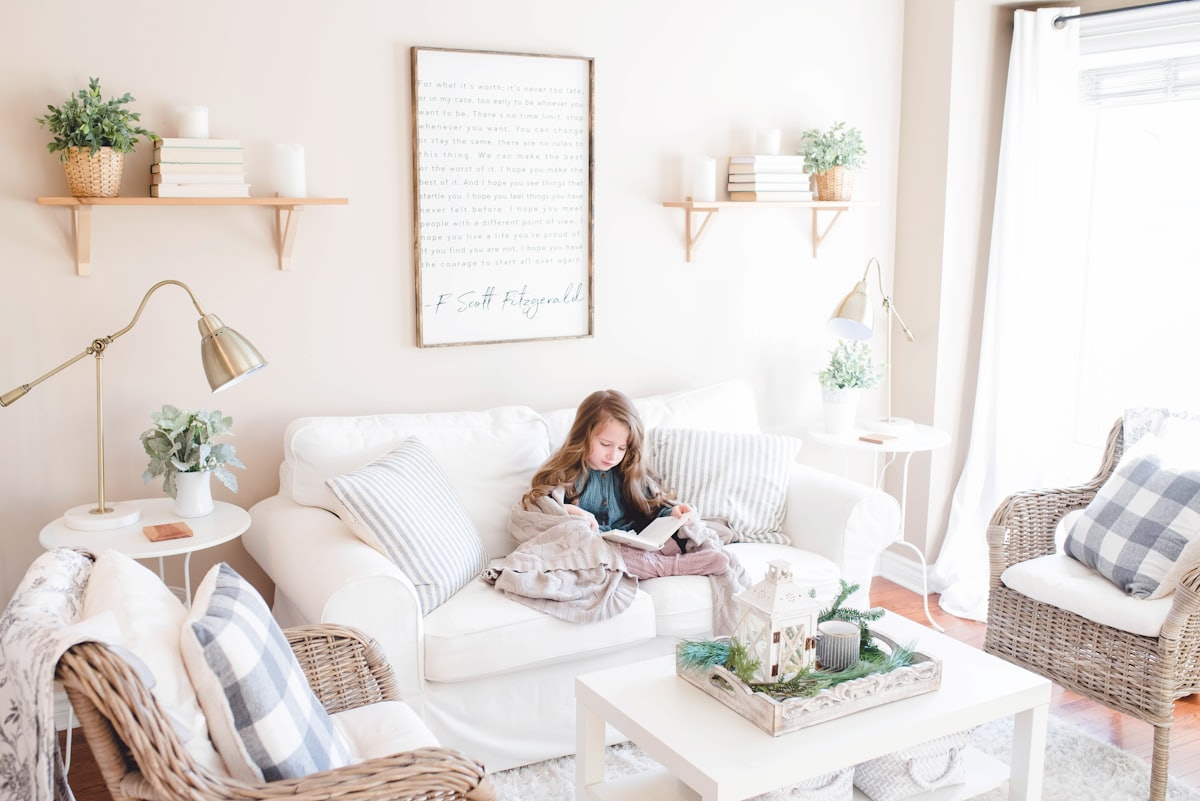
Short answer: You do not need a perfect, dedicated therapy room to prepare your home for in-home ABA. What helps most is a consistent, low-distraction space your child knows, a small set of familiar materials ready to go, a simple plan for siblings and screens during sessions, and an open, communicative relationship with your child’s team. The work itself is naturally part of family life, and a good clinical team will coach you through every bit of the setup. Below is a calm, room-by-room way to get ready before your first visit.
If you are feeling a mix of hope and nerves right now, that is completely normal. About 1 in 31 children aged 8 years has been identified with autism spectrum disorder (3.22%, or 32.2 per 1,000), and autism is “3.4 times as prevalent among boys (49.2 per 1,000) than girls (14.3),” according to the CDC’s 2022 ADDM Network data (CDC MMWR). Many families across Washington County, St. George, Washington, Hurricane, Santa Clara, Ivins, La Verkin, and over in Cedar City are getting ready the same way you are. Let’s walk through it together.
Why a little preparation matters (and why it’s worth it)
The reason to prepare your home for in-home ABA is that the home environment is both a strength and a real-world challenge, and a little planning lets you keep the strength while easing the challenge. ABA is “considered an evidence-based best practice treatment by the US Surgeon General and by the American Psychological Association,” and it can be “provided in many different locations – at home, at school, and in the community” (Autism Speaks). Doing it at home means your child practices skills exactly where they live their life.
A 2025 peer-reviewed study of home-based ABA found that in-home sessions let parents observe naturalistic teaching firsthand, caregivers “get to observe how we do toilet programs… how we do meal time.” But the same study honestly named the home’s challenges: competing distractions and limited space. As one registered behavior technician (RBT) put it, “it can be difficult to get them to attend when their bed is right here. When you know brother and sister are watching TV” (Ferretti et al., 2025, Children (Basel)). Preparing ahead simply smooths those edges.
How to prepare your home for in-home ABA without a dedicated room
The single biggest worry parents raise is space, and here is the reassuring truth: a separate therapy room is not required to prepare your home for in-home ABA. The 2025 study was explicit that home realities vary; as one RBT noted, “Not every family is in the position to have multiple rooms” (Ferretti et al., 2025). What works is consistency, not square footage.
Pick a spot your child associates with calm focus, a corner of the living room, one end of the kitchen table, a cleared area of a bedroom. Aim for a place with a little visual quiet (fewer toys in eyeline, a wall rather than a window full of activity) and room for your child and the therapist to sit comfortably. Using the same spot each session helps your child settle in faster. If your only quiet option is also where the bed or the TV lives, that is okay, tell your BCBA, and we’ll build the plan around your actual home, not an idealized one.
Gathering materials before the first session
A short, simple supply list goes a long way when you prepare your home for in-home ABA, and most of it you already own. Before the first visit, it helps to have a few of your child’s favorite toys, books, or activities accessible, these are often used as motivators and to build rapport. Keep some everyday items handy too: a child-height table and chairs if you have them, a few snacks or drinks your child enjoys, and any items tied to a daily routine your team may target (toothbrush, utensils, a favorite cup).
You do not need to buy special equipment or “ABA kits.” Your therapist brings their own clinical materials and will tell you if anything specific would help. The goal is for teaching to happen with the real objects of your child’s day, because ABA emphasizes practicing skills in the natural environment where they’ll actually be used. When in doubt, ask, over-buying is unnecessary, and your team would rather you save your energy.
Planning for siblings, screens, and distractions
Having a simple plan for siblings and screens is one of the most useful things you can do, since distraction is the home’s best-documented challenge. The 2025 study captured this directly: it’s “difficult to get them to attend when their bed is right here. When you know brother and sister are watching TV” (Ferretti et al., 2025). You don’t need a silent house, just a workable rhythm.
A few gentle ideas: schedule sessions when siblings are at school, napping, or have a quiet activity of their own; keep the TV in a different room during focused work; and let other caregivers know the session window so the home stays a little calmer. That said, siblings being around is not a failure, in-home ABA folds into family life, and there are natural moments where including a sibling in play actually helps. Your therapist will read the room and coach you on what to protect and what to lean into.
Your role as a parent, you’re part of the team
Preparing emotionally matters as much as preparing the space, and the good news is your involvement is expected and supported, not graded. In ABA, “parents, family members and caregivers receive training so they can support learning and skill practice throughout the day” (Autism Speaks). The 2025 study likewise highlighted relationship-building, direct coaching and modeling, and clear communication as the things that make home programs work best (Ferretti et al., 2025).
Before the first visit, jot down your hopes and worries, the routines that are hardest, and anything that soothes or motivates your child. Plan to be reachable during early sessions so you can observe, ask questions, and learn the strategies you’ll use between visits. And remember that good ABA is “not ‘one size fits all’” (Autism Speaks), your insight about your own child shapes the plan. You are the expert on your child; we bring the clinical structure.
A note on getting started in Utah
Getting the paperwork in order early removes friction on day one. Utah Medicaid covers ABA for children with an ASD diagnosis under the EPSDT program, and these services require a valid ASD diagnosis, a written prescription from a qualified clinician, and prior authorization. Reassuringly for in-home families, “ABA services may be delivered in a variety of relevant naturally occurring settings in the home and community” (Utah Medicaid Provider Manual). At Ryse, an autism diagnosis and active insurance coverage are required, and we’re glad to help you understand your specific benefits.
If you’re earlier in the journey, know that the timing is on your side. “Research shows that early intervention services can greatly improve a child’s development and result in better outcomes,” and “getting services as early as possible can make a difference in the development of a child with autism spectrum disorder” (CDC). Encouragingly, identification is improving: the median age of earliest known ASD diagnosis was 47 months, and by age 48 months identification was 1.7 times as high for children born in 2018 versus 2014 (CDC MMWR).
Frequently Asked Questions
Do I need a separate room for in-home ABA therapy? No. A dedicated therapy room is not required, and the research is clear that “not every family is in the position to have multiple rooms” (Ferretti et al., 2025). A consistent, relatively quiet corner that your child knows works well. The key is using the same spot each time so your child can settle in, your BCBA will help you choose it based on your actual home.
How do I handle siblings and distractions during ABA sessions? A simple plan helps, since distraction is the home setting’s most documented challenge, it’s hard “when you know brother and sister are watching TV” (Ferretti et al., 2025). Try scheduling around school or nap times, keeping screens in another room during focused work, and giving siblings their own quiet activity. You don’t need a silent house, and including siblings in play is sometimes part of the plan.
What materials or supplies should I have ready before the first session? Mostly things you already own: a few favorite toys, books, or activities your child loves, a child-sized table and chairs if available, some preferred snacks or drinks, and any everyday items tied to routines you want to work on. You don’t need to buy special equipment, your therapist brings clinical materials and will tell you if anything specific would help.
What should I expect during the first in-home ABA visit, and what’s my role as a parent? Early visits focus on building rapport and getting to know your child. Your role is active and supported: “parents, family members and caregivers receive training so they can support learning and skill practice throughout the day” (Autism Speaks). Plan to be present to observe, ask questions, and share what motivates and soothes your child, your insight shapes a plan that’s written for your individual learner.
Does Utah Medicaid cover in-home ABA therapy, and what do I need to qualify? Utah Medicaid covers ABA for children with an ASD diagnosis under the EPSDT program, and services require a valid ASD diagnosis, a written prescription from a qualified clinician, and prior authorization; ABA “may be delivered in a variety of relevant naturally occurring settings in the home and community” (Utah Medicaid Provider Manual). At Ryse, an autism diagnosis and active insurance coverage are required, and we’ll help you check your benefits.
Ready to start, with no waitlist
Preparing your home is really about clearing a little space, physical and emotional, for your child to grow, and you don’t have to figure it out alone. At Ryse ABA Therapy, we provide in-home and community-based ABA across Southern Utah, St. George, Washington, Hurricane, Santa Clara, Ivins, La Verkin, and Cedar City, for ages 2 to 65, led by our Clinical Director, Noah Rasmussen, BCBA. Our care is family-first, play-based, and data-driven, built around your child as an individual, and we’ll coach you through every step of setting up your home. Because we know waiting is the hardest part, we have no waitlist, families start right away. When we Ryse together, we achieve more. Call us at (385) 549-5656 to get started.
Sources
- CDC MMWR, Prevalence and Early Identification of ASD Among Children Aged 4 and 8 Years, ADDM Network, 16 Sites, 2022, https://www.cdc.gov/mmwr/volumes/74/ss/ss7402a1.htm
- CDC, Accessing Services for Autism Spectrum Disorder, https://www.cdc.gov/autism/treatment/accessing-services.html
- Autism Speaks, Applied Behavior Analysis (ABA), https://www.autismspeaks.org/applied-behavior-analysis
- Ferretti, Uhl, Zawacki & McCallion (2025), Understanding Barriers and Facilitators of Parent/Caregiver Involvement in Home-Based Applied Behavioral Analysis Programming for Their Autistic Child, Children (Basel) 12(7), 850, https://www.mdpi.com/2227-9067/12/7/850
- Utah Medicaid Provider Manual, Autism Spectrum Services, https://medicaid-manuals.dhhs.utah.gov/Autism_Spectrum_Services/autism_spectrum_services.htm