Speech Delay vs. Autism: How to Tell the Difference
Speech delay vs autism: the real difference isn't fewer words, it's social communication. A warm, BCBA-written guide for worried parents.
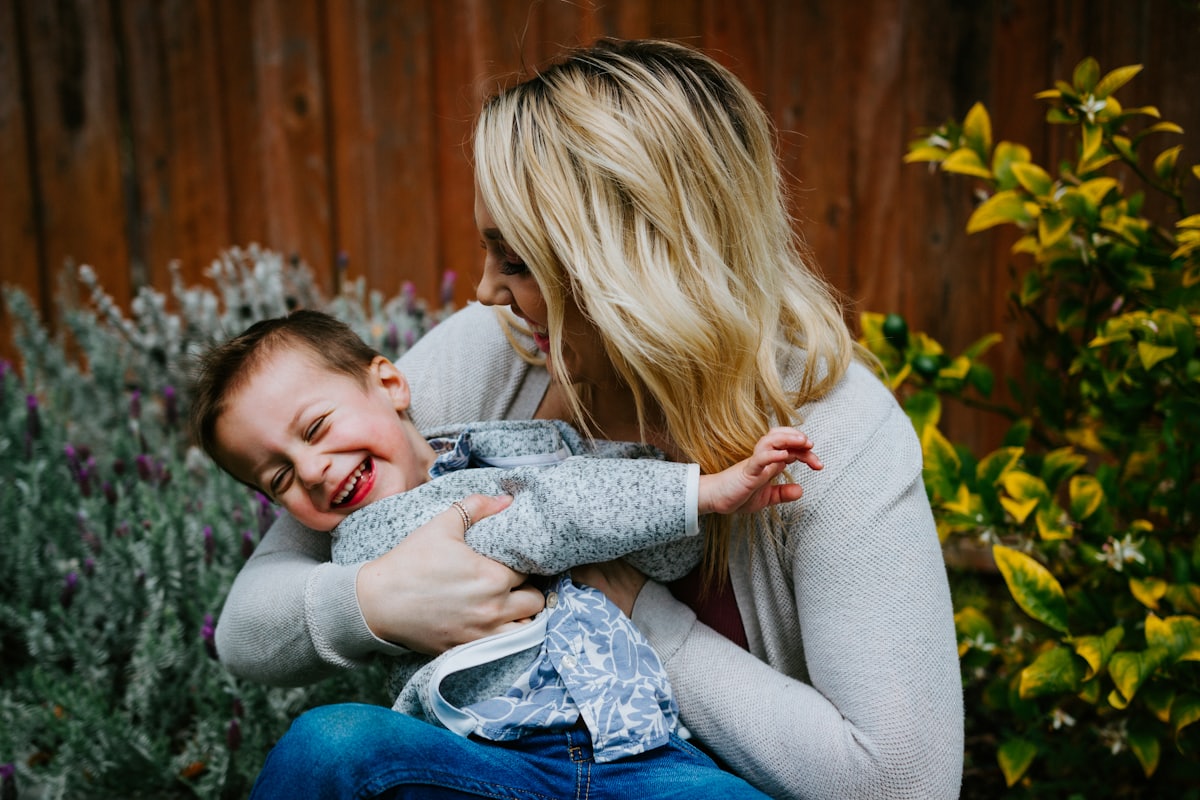
Short answer: a child can absolutely have a speech delay without being autistic, and the way to tell them apart is to look past the words. When parents ask about speech delay vs autism, they’re usually watching a quiet toddler and quietly worrying. Here’s the reassuring truth: most late talkers are not autistic. The key isn’t how many words your child has, it’s whether they’re still connecting socially in other ways. A late talker who points, shows you things, makes eye contact, and pulls you into play is communicating; they’re just doing it without much spoken language yet. When the broader pattern of social communication is missing too, that’s what warrants an autism evaluation. Below, we’ll walk through exactly what to look for, written for tired, hopeful parents in Southern Utah who want a clear path forward.
Speech delay vs autism comes down to social communication, not vocabulary
The single most important idea in the speech delay vs autism question is this: delayed talking by itself is not a red flag for autism. As The ASHA Leader, the publication of the American Speech-Language-Hearing Association, puts it, “Delayed talking alone is not considered a risk factor for autism” (The ASHA Leader, “Untangling the Language Challenges of Autism”, https://leader.pubs.asha.org/doi/10.1044/leader.FTR2.22042017.54). What actually distinguishes the two is social communication, the back-and-forth, nonverbal connection that comes before and alongside speech.
Think of it this way. A child with a simple language delay typically still points to show you the airplane, hands you a toy to share it, looks to your face to check your reaction, and lights up when you play together. The words are late, but the social wiring is busy and intact. Autism, by contrast, tends to involve a broader pattern: less pointing and showing, less eye contact, and less interest in the social give-and-take itself. ASHA also notes a subtler difference in pragmatics, an autistic child may be able to label objects yet not use those words to functionally communicate with another person. So it’s not only “does my child talk?” but “is my child reaching out to connect?”
How common is autism, and why it’s not a reason to panic
Autism is more common than many parents realize, which is exactly why it helps to know the signs rather than guess in the dark. According to the CDC, “About 1 in 31 (3.2%) children aged 8 years has been identified with ASD,” based on 2022 surveillance data, up from the prior estimate of about 1 in 36 (CDC, “Data and Statistics on Autism Spectrum Disorder”, https://www.cdc.gov/autism/data-research/index.html). The CDC also notes that “ASD is over 3 times more common among boys than among girls,” and that it occurs across all racial, ethnic, and socioeconomic groups (CDC, https://www.cdc.gov/autism/data-research/index.html).
Numbers like these aren’t meant to scare you. They’re meant to normalize the conversation. Autism is a common, well-understood part of human neurodiversity, and noticing early signs isn’t a verdict, it’s an invitation to ask good questions and get the right support.
The signs to watch, look at gestures and connection, not just words
When you’re weighing speech delay vs autism, the most useful things to watch are the early social-communication milestones, not the size of your child’s vocabulary. The CDC lists specific signs that may suggest an autism evaluation is worthwhile. A child who shows several of these, especially together, is worth a closer look. The CDC notes a child may be autistic if they (CDC, “Signs and Symptoms of Autism Spectrum Disorder”, https://www.cdc.gov/autism/signs-symptoms/index.html):
- “Does not respond to name by 9 months of age”
- “Does not show facial expressions such as happy, sad, angry, and surprised by 9 months of age”
- “Uses few or no gestures by 12 months of age (for example, does not wave goodbye)”
- “Does not share interests with others by 15 months of age”
- “Does not point to show you something interesting by 18 months of age”
- “Avoids or does not keep eye contact”
- “Does not pretend to be something else… during play by 48 months (4 years) of age”
You may also hear about echolalia, the CDC lists “Repeats words or phrases over and over (called echolalia)” among restricted and repetitive behaviors, not as a missed milestone (CDC, https://www.cdc.gov/autism/signs-symptoms/index.html). Notice how few of these are about word count. Almost every one is about connection: responding, sharing, pointing, pretending, looking. That’s the heart of the speech delay vs autism distinction.
What most 2-year-olds are doing, a milestone yardstick
It also helps to know what’s typical, so you can compare rather than catastrophize. By 24 months, the CDC says most children can do things like (CDC, “Milestones by 2 Years”, https://www.cdc.gov/act-early/milestones/2-years.html):
- “Says at least two words together, like ‘More milk.’”
- “Points to things in a book when you ask, like ‘Where is the bear?’”
- “Points to at least two body parts when you ask him to show you”
- “Uses more gestures than just waving and pointing, like blowing a kiss or nodding yes”
If your two-year-old isn’t combining two words yet, that alone is a reason to check in with your pediatrician about language, but it isn’t, on its own, a sign of autism. What tips the scale toward an autism conversation is when the gestures and social pieces are missing too: no pointing to show, few gestures, little response to their name. One quiet skill is a question; a cluster of missing social-communication skills is a pattern.
What to do next, screening, the M-CHAT, and why earlier helps
The good news is that you don’t have to figure this out alone, and there’s a clear first step. The CDC recommends that “All children should be screened specifically for autism spectrum disorder (ASD) during well-child doctor visits at 18 months and 24 months” (CDC, “Clinical Screening for Autism Spectrum Disorder”, https://www.cdc.gov/autism/hcp/diagnosis/screening.html). One common tool is the Modified Checklist for Autism in Toddlers (M-CHAT), which the CDC describes as a “parent-completed questionnaire designed to identify children at risk for autism in the general population” (CDC, https://www.cdc.gov/autism/hcp/diagnosis/screening.html). A screen isn’t a diagnosis, it’s a conversation starter to bring to your child’s doctor.
Why not just wait and see? Because timing genuinely matters. Peer-reviewed research indicates that intervention started in the first years of life, when the brain’s plasticity is greatest, is associated with better developmental outcomes. A selective review of the evidence found that across most studies, a younger age at the start of intervention predicted at least one improved outcome, though the effect was modest and worked alongside other factors (NIH/PMC, “Is Earlier Better? … Age When Starting Early Intervention and Outcomes”, https://pmc.ncbi.nlm.nih.gov/articles/PMC7421097/; “Early Diagnosis of Autism Spectrum Disorder: A Review and Analysis of the Risks and Benefits”, https://pmc.ncbi.nlm.nih.gov/articles/PMC10491411/). Outcomes vary from child to child, so no one can promise a specific result, but starting sooner simply gives your child more time to grow with the right support. For families in St. George and across Southern Utah, that early window is precious, and it’s a big part of why we don’t believe in making families wait.
Frequently Asked Questions
Can my child have a speech delay without being autistic? Yes, most late talkers are not autistic. As The ASHA Leader states, “Delayed talking alone is not considered a risk factor for autism” (https://leader.pubs.asha.org/doi/10.1044/leader.FTR2.22042017.54). The differentiator is social communication: a child who still points, shows, gestures, makes eye contact, and seeks out play is connecting, they’re just talking later. It’s the broader absence of those social signs that points toward an autism evaluation (CDC, https://www.cdc.gov/autism/signs-symptoms/index.html).
At what age should I worry that my child isn’t talking? By 24 months, the CDC says most children say “at least two words together, like ‘More milk’” and point to things in a book when asked (https://www.cdc.gov/act-early/milestones/2-years.html). If your two-year-old isn’t combining words, it’s worth raising with your pediatrician. Pay special attention earlier, too, most children point to show you something interesting by 18 months (CDC, https://www.cdc.gov/autism/signs-symptoms/index.html). Not pointing to share is more telling than a smaller vocabulary.
What’s the difference between a “late talker” and autism? A late talker uses fewer words but still communicates socially, gesturing, pointing, making eye contact, and joining in play. Autism involves a broader social-communication difference. ASHA notes the pragmatic piece: an autistic child may be able to label objects yet not use words to functionally connect with another person (https://leader.pubs.asha.org/doi/10.1044/leader.FTR2.22042017.54). So watch for connection, not just count.
When should my child be screened for autism, and what is the M-CHAT? The CDC recommends autism-specific screening “during well-child doctor visits at 18 months and 24 months,” and any time you have a concern (https://www.cdc.gov/autism/hcp/diagnosis/screening.html). The M-CHAT is a “parent-completed questionnaire designed to identify children at risk for autism in the general population” (CDC). It flags possible risk; it doesn’t diagnose. Bring your results to your pediatrician.
Why does getting evaluated early matter, can’t we just wait and see? Because the early years are when the brain is most adaptable. Peer-reviewed reviews indicate that intervention begun earlier in life is associated with better developmental outcomes (NIH/PMC, https://pmc.ncbi.nlm.nih.gov/articles/PMC7421097/ and https://pmc.ncbi.nlm.nih.gov/articles/PMC10491411/). Results differ for every child, so we won’t promise a specific outcome, but earlier support gives your child more time to build skills.
You don’t have to wait to get answers
If you’ve recognized your child in any part of this guide, take a breath, noticing is the hardest part, and you’ve already done it. The gentle next steps are simple: a parent screen like the M-CHAT, a conversation with your pediatrician, and an autism evaluation if the pattern points that way. And if a diagnosis does come, you don’t have to sit on a list before help begins.
At Ryse ABA Therapy, we provide BCBA-led, in-home and community-based ABA for families across St. George, Washington, Hurricane, Santa Clara, Ivins, La Verkin, and Cedar City. Our care is family-first, play-based, and built around your child’s real life, at home, where learning sticks. And because we know waiting is the hardest part, we have no waitlist: once your child has an autism diagnosis and active insurance coverage, families can start right away. When we Ryse together, we achieve more. Call us at (385) 549-5656 to talk through what you’re seeing with someone who’s here to help.
Sources
- CDC, “Data and Statistics on Autism Spectrum Disorder”, https://www.cdc.gov/autism/data-research/index.html
- CDC, “Signs and Symptoms of Autism Spectrum Disorder”, https://www.cdc.gov/autism/signs-symptoms/index.html
- CDC, “Milestones by 2 Years” (Learn the Signs. Act Early.), https://www.cdc.gov/act-early/milestones/2-years.html
- CDC, “Clinical Screening for Autism Spectrum Disorder”, https://www.cdc.gov/autism/hcp/diagnosis/screening.html
- The ASHA Leader (American Speech-Language-Hearing Association), “Untangling the Language Challenges of Autism,” Vol. 22, No. 4, https://leader.pubs.asha.org/doi/10.1044/leader.FTR2.22042017.54
- NIH/PMC, “Is Earlier Better? … Age When Starting Early Intervention and Outcomes”, https://pmc.ncbi.nlm.nih.gov/articles/PMC7421097/
- NIH/PMC, “Early Diagnosis of Autism Spectrum Disorder: A Review and Analysis of the Risks and Benefits”, https://pmc.ncbi.nlm.nih.gov/articles/PMC10491411/