Your First ABA Assessment: What to Expect
ABA assessment: what to expect at your first visit, the interview, play-based observation, tools used, and how individualized goals are set.
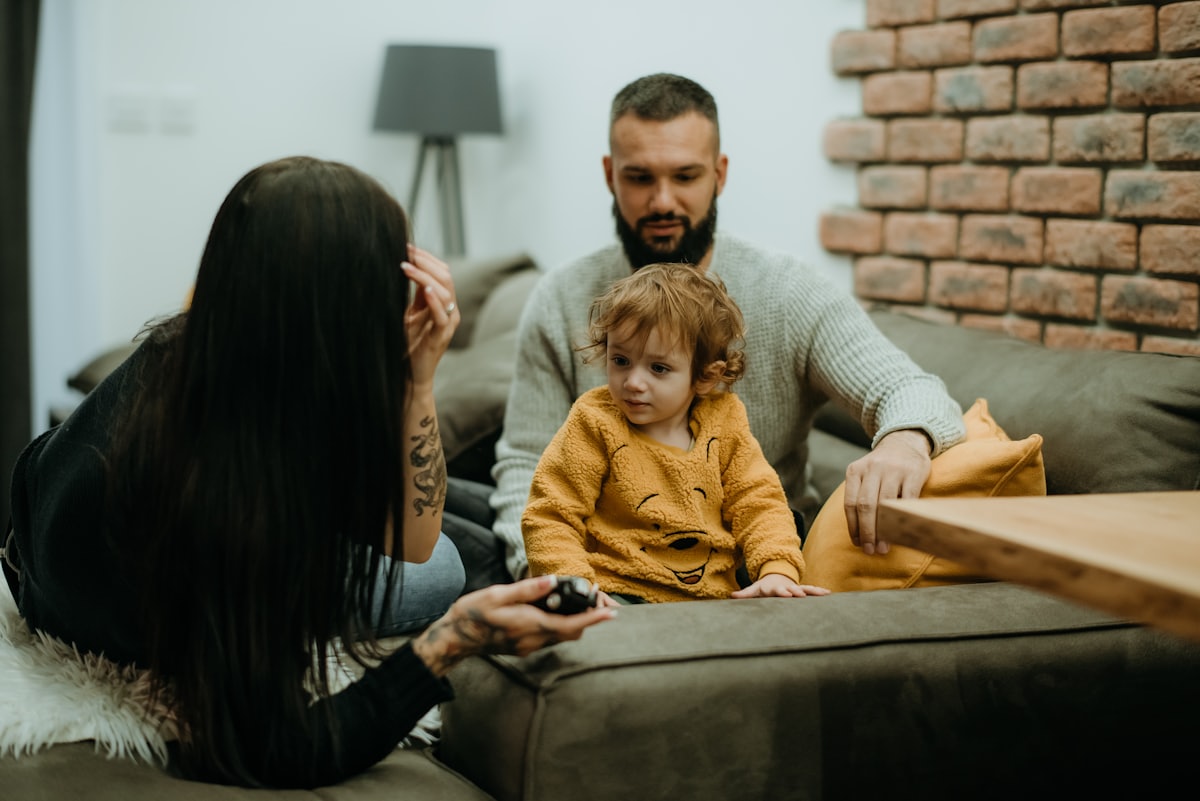
The short answer: Your first ABA assessment is a warm, low-pressure visit where a Board Certified Behavior Analyst (BCBA) gets to know your child and your family. The BCBA interviews you about your child’s history, strengths, and the goals that matter most to you, while observing your child, often through play, to understand how they communicate, learn, and interact. From there, the BCBA designs an individualized program built around your child, because, as Autism Speaks puts it, “each program is written to meet the needs of the individual learner” (Autism Speaks). If you’ve been searching for aba assessment what to expect, this guide walks you through it plainly, so you can arrive feeling prepared rather than anxious.
The assessment starts with a conversation about your child
The heart of a first ABA assessment is a conversation, you are the expert on your child, and the BCBA will treat you that way. A Board Certified Behavior Analyst begins with “a detailed assessment of each person’s skills and preferences,” and uses what they learn to “customize the ABA program to each learner’s skills, needs, interests, preferences and family situation” (Autism Speaks). In practice, that means the BCBA will ask about your child’s developmental history, how they communicate, what they love, what’s hard right now, and what you most want to see change. There are no wrong answers here. The goal is to understand your child as a whole person, not to fit them into a template.
For families across Southern Utah, this is one of the things that makes the aba assessment what to expect experience feel different than people fear. It isn’t a clinical interrogation. It’s a collaborative discussion, and your priorities for your child genuinely shape the plan that comes next.
Watching your child play tells the BCBA a lot
Much of what a BCBA learns in a first assessment comes from simply observing your child being themselves, frequently through play. Rather than running your child through a fixed series of drills, the analyst watches how they interact, communicate, and respond to their environment. This matters because, as Autism Speaks notes, “Good ABA programs for autism are not ‘one size fits all.’ ABA should not be viewed as a canned set of drills. Rather, each program is written to meet the needs of the individual learner” (Autism Speaks).
A play-based, observational approach is also gentler on your child. Many children are most themselves when they’re playing, so a low-pressure session gives the BCBA an honest picture of your child’s communication, social engagement, and everyday skills, without overwhelming them. If your child needs breaks, that’s expected and welcome.
ABA assessment tools: what to expect and what they measure
Alongside the interview and observation, your BCBA may use validated assessment tools to measure where your child is across different skill areas. These aren’t arbitrary checklists, they’re research-backed instruments. The Vineland-3, for example, “should be considered the gold-standard for assessment of adaptive functioning” and is validated in autistic populations, while VB-MAPP milestones show “moderate to strong correlations” with the Vineland’s communication, socialization, and daily living domains (Springer Review Journal). You may also hear tool names like the ABLLS-R or PEAK.
What these tools measure varies, adaptive functioning (everyday life skills), language and communication, social skills, learning readiness, but the purpose is the same: to translate observations into a clear, individualized starting point. Treatment goals are then “written based on the age and ability level of the person with ASD” and can span communication and language, social skills, and self-care (Autism Speaks).
The BCBA designs and oversees the whole plan
A qualified, credentialed professional is responsible for your child’s assessment and program from start to finish. “A qualified and trained behavior analyst (BCBA) designs and directly oversees the program” (Autism Speaks). As the BACB’s BCBA Handbook describes, a behavior analyst’s responsibilities commonly include conducting assessments, designing intervention and skill-acquisition plans, analyzing data, and supervising and training the staff who deliver services (BACB BCBA Handbook).
This work is also governed by formal professional standards. The Ethics Code for Behavior Analysts went into effect January 1, 2022, and it governs how pre-intervention assessment and individualized behavior-change plans are conducted (BACB Ethics Codes). At Ryse ABA Therapy, our Clinical Director Noah Rasmussen, BCBA, leads this process for families across Washington and Iron Counties.
Why families are seeking ABA assessments now
If it feels like more families are exploring autism services, the data reflects that. The CDC reports that “About 1 in 31 (3.2%) children aged 8 years has been identified with ASD according to estimates from CDC’s ADDM Network”, up from 1 in 36 in the prior surveillance year (CDC). Public-health experts generally point to factors like broader awareness and improved screening and identification as contributing to the rising identified prevalence over time. In other words, more children are being seen and supported, which is a good thing.
Research also lends support to starting when you’re ready. Studies suggest that gains from early and intensive behavioral intervention can be durable: one body of evidence found that “Treatment gains from early and intensive behavioral intervention (EIBI) are maintained 10 years later,” and intervention intensity is associated with better outcomes (CASP). We share this as research context, not a promise, every child is different, and no outcome is guaranteed for any individual.
Frequently Asked Questions
What actually happens during the first ABA assessment? Your BCBA interviews you about your child’s history, strengths, and goals while observing your child, usually through play, to understand how they communicate, learn, and interact. It may include a play-style direct assessment. The aim is to understand your child individually so the program can be built around them (Autism Speaks).
How long does an ABA assessment take, and when does therapy start? The assessment is typically an interview-plus-observation visit. Afterward, the BCBA reviews the results and finalizes individualized goals before sessions begin. We’ll give you a clear timeline for your family during the visit. The key point is that the program is thoughtfully designed before therapy starts so it truly fits your child.
Do I need an autism diagnosis before the ABA assessment? For insurance coverage, yes, an active autism diagnosis is generally required. Utah Medicaid notes that autism-related services are available to eligible members with a diagnosis of ASD, and ABA-related services require a valid ASD diagnosis rendered by an appropriately licensed clinician (Utah Medicaid). If you’re unsure where you stand, give us a call and we’ll help you figure out next steps.
What assessment tools will be used, and what do they measure? Your BCBA may use validated tools such as the Vineland-3 (adaptive, everyday-life functioning) and the VB-MAPP or ABLLS-R (language, learning, and social skills). These are research-backed instruments, not arbitrary checklists (Springer Review Journal).
How can I prepare my child and myself for the assessment? Bring your child’s developmental history, any prior evaluations, and a short list of your own goals, the things you most want to see progress on. Expect a warm, play-based, low-pressure session. You don’t need to “prep” your child to perform; the BCBA wants to see them as they really are (Autism Speaks).
Ready when you are, no waitlist
If you’re a parent in St. George, Washington, Hurricane, Santa Clara, Ivins, La Verkin, or Cedar City wondering what comes next, you don’t have to wait to find out. Ryse ABA Therapy provides in-home and community-based ABA across Southern Utah, led by a BCBA, with personalized, play-based, data-driven care, and no waitlist, so your family can start right away. An active autism diagnosis and insurance coverage are needed to begin, and we’re happy to walk you through it. Call us at (385) 549-5656 to talk with someone who gets it. When we Ryse together, we achieve more.
Sources
- CDC, Data and Statistics on Autism Spectrum Disorder: https://www.cdc.gov/autism/data-research/index.html
- Autism Speaks, Applied Behavior Analysis (ABA): https://www.autismspeaks.org/applied-behavior-analysis
- BACB, BCBA Handbook: https://www.bacb.com/wp-content/uploads/2025/08/BCBAHandbook_260130-a.pdf
- BACB, Ethics Codes (Ethics Code for Behavior Analysts, effective January 1, 2022): https://www.bacb.com/ethics-information/ethics-codes/
- Utah Medicaid (Utah DHHS), ASD Related Services: https://medicaid.utah.gov/ltc-2/asd/
- Springer, Review Journal of Autism and Developmental Disorders (2023): https://link.springer.com/article/10.1007/s40489-023-00355-9
- Council of Autism Service Providers (CASP), Evidence About Early Intensive ABA Treatment: https://www.casproviders.org/evidence-intensive-early-aba